Articles in this series
1. Why Your Church Needs a Scout Group Right Now
2. What Does Your Church Need to Start a Scout Group?
3. What Do Scouts Actually Do?
4. Living Out Your Faith in Scouting
5. Scouting Glossary
1. Why Your Church Needs a Scout Group Right Now
2. What Does Your Church Need to Start a Scout Group?
3. What Do Scouts Actually Do?
4. Living Out Your Faith in Scouting
5. Scouting Glossary
Akela, patrol and jamboree: what do they actually mean? You may have noticed that scouts have a vocabulary all their own. The words aren’t always easy to understand at first glance if you didn’t grow up with them. Many of these terms have a long tradition and reflect the special values and customs of the scouting movement. They’re more than just words: they embody the shared experiences, the sense of belonging and the love of adventure that make scouting what it is. To give you a better overview and help you dive into the world of scouting, we’ve collected and explained the most important terms here.
| Term | What it means |
|---|---|
| Akela | In many scouting organizations, the leader of the Cub Scouts is called “Akela.” The name comes from Rudyard Kipling’s The Jungle Book, where Akela is the old leader of the wolf pack. |
| Association | An association is a union of several local scout groups that share common values and structures. Within an association, groups often work closely together. |
| B-P | B-P stands for Robert Baden-Powell, the founder of the scouting movement. His ideas and educational principles still shape scouting around the world today. |
| Be Prepared | The scout motto. It means always being ready to face challenges. This motto encourages a positive attitude toward life and a sense of responsibility. |
| Beavers | In many organizations, the youngest section, for children around kindergarten age. Beavers get a first taste of scouting through playful activities. |
| Group | The local unit of scouting in a town or a church. Its members are divided into different age sections, but they often work together. |
| Handbook | A booklet in which a scout’s progress is recorded. It has entries for completed requirements, which the leader signs off. |
| Hike | An outing in which scouts head out into nature in small groups. Along the way, they have certain tasks to complete. |
| Investiture | A ceremony in which a new member is officially welcomed into the scout group. During the ceremony, the new scout makes the Scout Promise and often receives a neckerchief as a sign of belonging. |
| Jamboree | A large camp where scouts from all the groups of an association come together. It’s a chance to meet scouts from other regions. |
| Learning by doing | This principle of scouting says that you learn best through hands-on experience. Scouts gain their skills by solving tasks on their own and learning from their mistakes. |
| Neckerchief | One of the best-known symbols of scouting. It comes in different colors depending on the section, group or association, and it shows that you belong to the scouting movement. |
| Pack | The Cub Scouts meet as a pack. A large group of children can be divided into smaller packs, often of about 15 to 20 Cubs, each with its own pack leader. |
| Paddle your own canoe | This educational principle encourages you to take charge of your own life, like a canoeist who steers their own canoe. |
| Patrol | A small group of children or teenagers within a scout group. In a patrol, members learn that everyone plays an important role. |
| Requirements | Tasks that scouts complete depending on their age and section. One example: lighting a campfire with just one match. |
| Rovers | The oldest section, for older teenagers and young adults. Rovers get the chance to act more independently and take on responsibility. |
| Scout Law | A set of rules that is meant to shape how scouts behave. One example: “A Scout is helpful.” |
| Scout sign | Made with the right hand: the three middle fingers are held up while the thumb holds down the little finger. The three fingers stand for the three parts of the Scout Promise. |
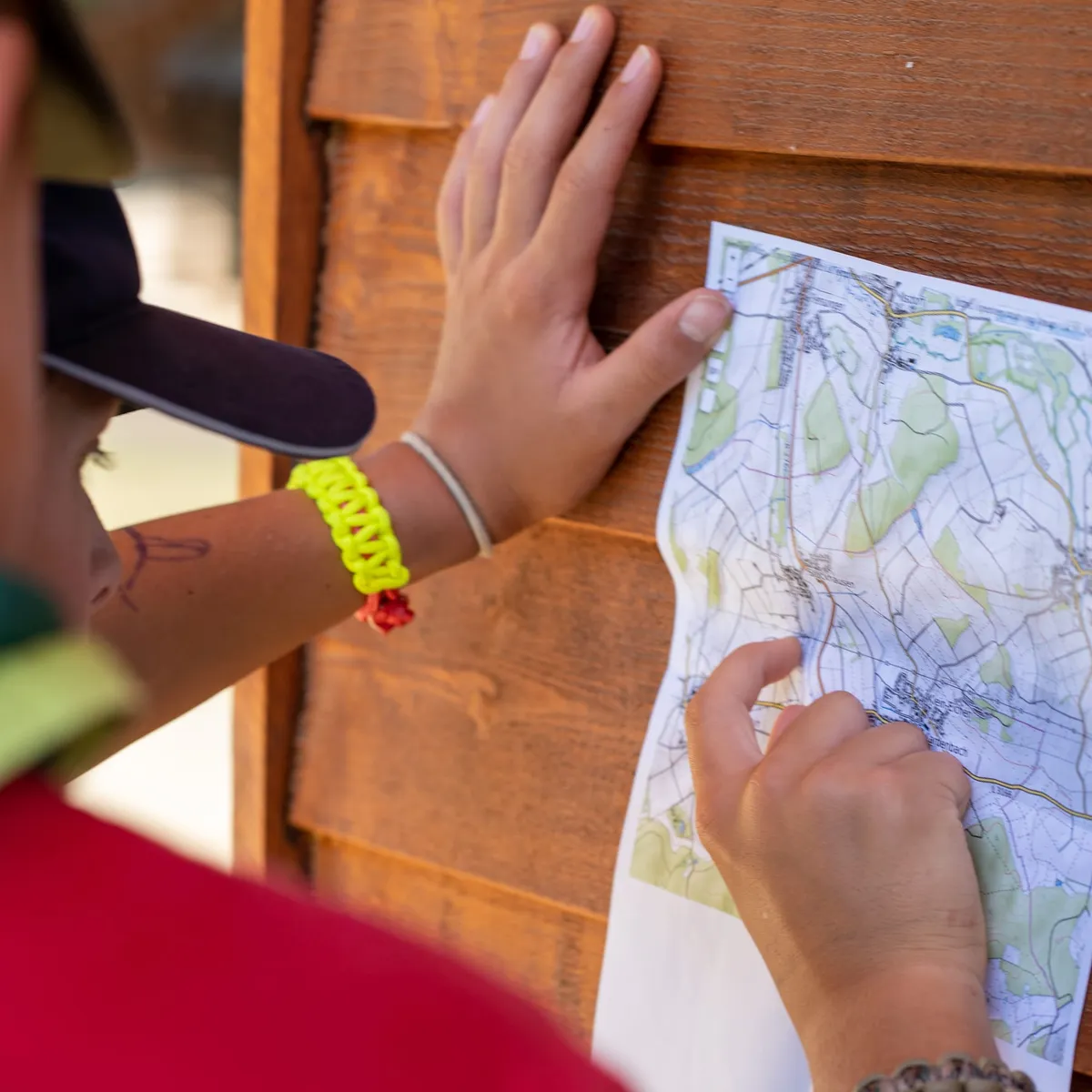
| Sketch map | A hand-drawn map used on hikes or orienteering courses. It’s a simplified picture of the area and helps scouts find their way. |
| Trek | A typical scout adventure: several days on the move, on foot or by bike. |
| Uniform | The sturdy, matching shirt that scouts wear. It’s seen less as a uniform in the military sense and more as a practical piece of clothing that comes in handy in everyday scouting. |
ℹ️
This article is by Christian Holfeld. He is an organizational developer and theologian, and has been a passionate scout since 1982.
English version: October 2026