
In May I had the privilege of speaking to several hundred young leaders at a Pentecost youth conference in Germany (Pfingstjugendtreffen, Aidlingen). This is the whole talk as an article: to read, to pass on and to work through with your team. If you’d rather watch, the video (in German) is right here.
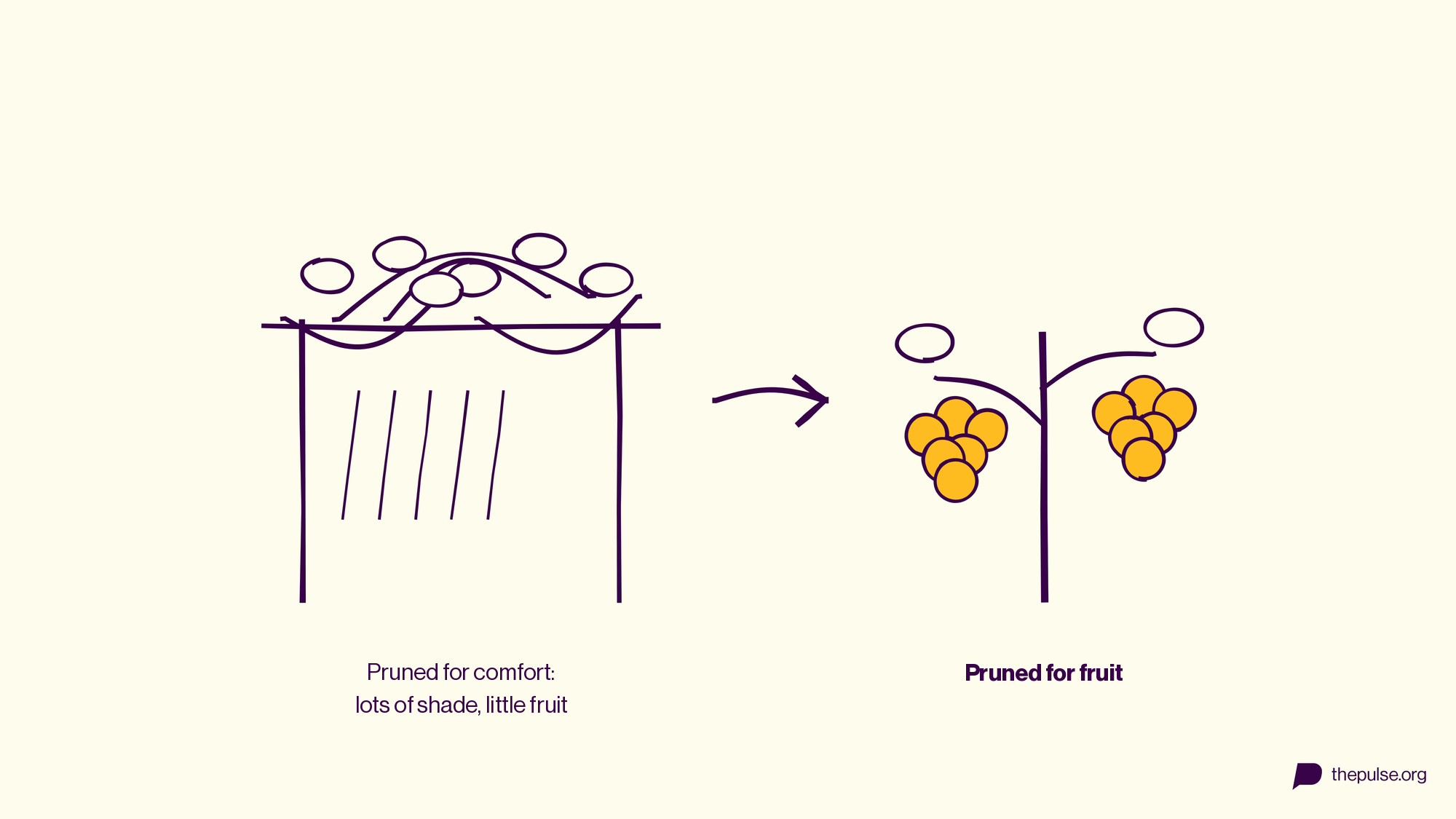
In Romania, where I live with my family as a missionary, grapevines grow in almost every yard. But they look different from the vineyards you may know. In wine country, vines are kept low and pruned back for fruit. Here, we let them climb high over the courtyards, because we want one thing above all: shade.
We prune for comfort, not for fruit. And that’s exactly what happens in churches. Sooner or later, the whole program is structured to produce more and more comfort for the members, and less and less fruit for what God actually had in mind.
Peter F. Drucker said, “Culture eats strategy for breakfast.” I’d put it even more sharply: culture eats everything. You can make the biggest plans and build the best church; if the culture is off, the whole project goes down the drain.
So the question is not whether your youth ministry has a culture. It has one. The question is who shapes it. And for that, it’s worth looking at the one who built the strongest culture in the history of the world: Jesus, in the first year and a half of his ministry.
If Jesus were an AI
I know, this sounds almost blasphemous. But imagine for a moment that Jesus were an AI and you had to write its system prompt: one single sentence it runs on. What would you put in?
“Answer every question in love”? “Anchor everything in the Word of God”? Both good answers. But when I look at Jesus, I see something else. Whenever he teaches, he comes back to one point: I do the will of the Father. And when he teaches his disciples to pray, it bursts right out: “Our Father in heaven, hallowed be your name, your kingdom come, your will be done” (Matthew 6:9-10).
That’s the master prompt. Jesus is optimized for the holiness of God: everything he does points to it, carries out the Father’s will and builds his kingdom.
Working with God or working for God?
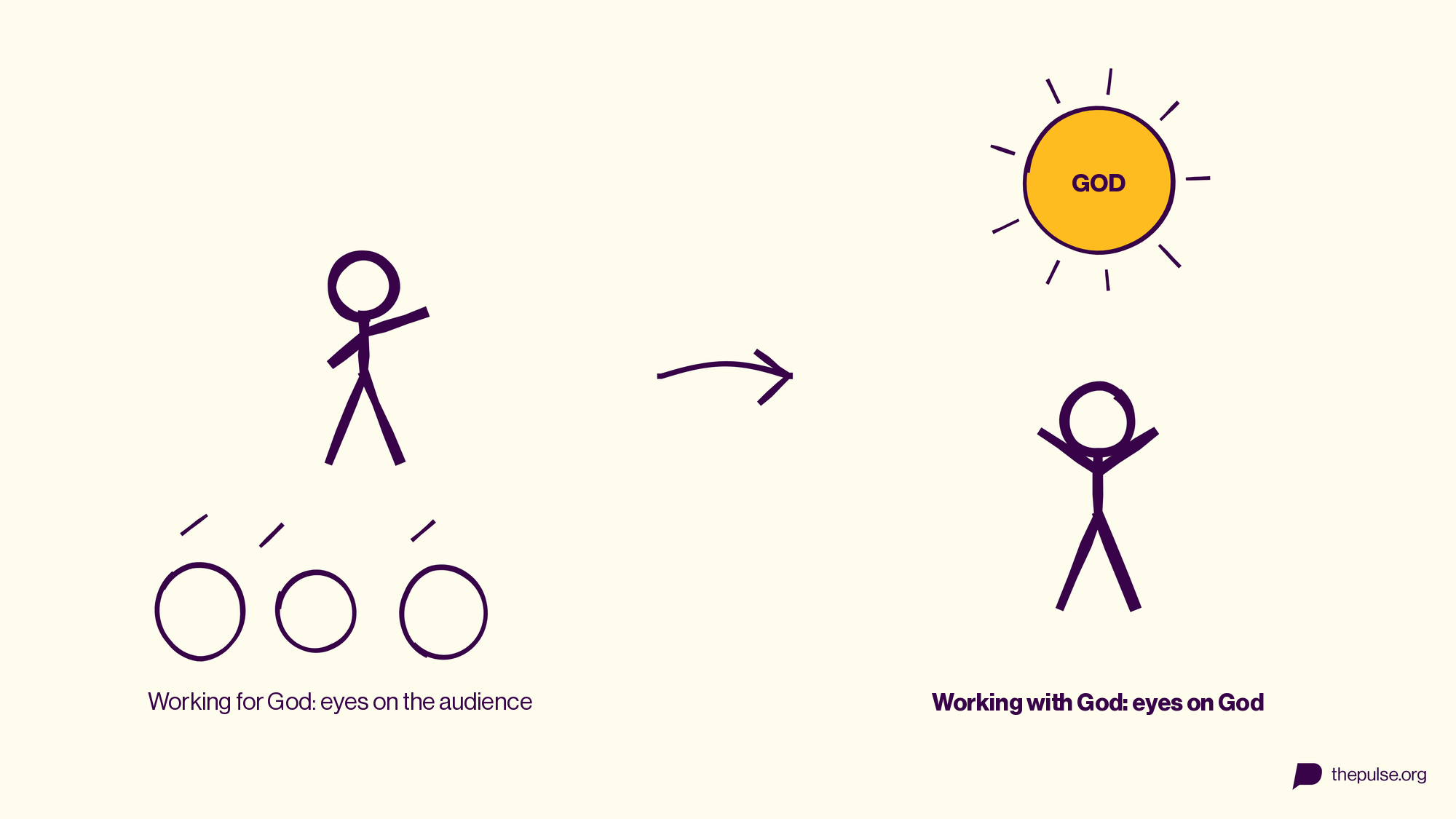
And now the uncomfortable question for us: Are you working with God in his kingdom, or are you working for God?
The scribes and Pharisees Jesus kept clashing with did things for God, but in their own interest. Their programming was different: they were driven by what others thought of them, busy with their image among the people. That is a small but far-reaching difference in programming. Because someone who works for God and gets criticized adapts, the way Peter later caved when the pressure came. Someone who works with God asks only: What is the Father’s will, and how do I carry it out in a way that honors the Father?
Our master prompt has only two commands
Suppose Jesus were to prompt us. What would his sentence for us be? We can look it up:
“All authority in heaven and on earth has been given to me. Therefore go and make disciples of all nations, baptizing them in the name of the Father and of the Son and of the Holy Spirit, and teaching them to obey everything I have commanded you. And surely I am with you always, to the very end of the age.” (Matthew 28:18-20 NIV)
In English it sounds like a whole to-do list. But in the Greek text there are only two real imperatives: Make disciples. And: Behold, the word the NIV renders as “surely”: look at me, pay close attention to me. Baptizing and teaching are the expressions, the how. The actual commands are: make disciples who make disciples. And study Jesus so closely that you soak up his culture.
Most of our lives should go into observing Jesus closely: How does he handle situations? What are his habits, his priorities?
That is exactly what we’re going to do now. What follows are five priorities from the first 18 months of Jesus’ ministry. They build on each other, and they are the foundation of the book Ministry Foundations, with which we have trained more than 8,000 leaders across Europe (more on that at the end).
Priority 1: Prayer
The starting gun for Jesus’ public ministry fires at his baptism. God affirms him: “This is my Son, whom I love” (Matthew 3:17). And what is the first thing Jesus does after that? He goes into the desert, forty days, fasting and praying (Matthew 4:1-2).
Pause for a moment: What would be the first thing you would do if you officially started a ministry that was supposed to change the world? Would you pray and fast for forty days? That is so countercultural. But for Jesus, the strongest priority is a strong prayer relationship with the Father.
The theologian P. T. Forsyth put into words one of the most challenging thoughts I have ever read on prayer: We consider murder, adultery or theft the worst sins. But the root of all sin is self-sufficiency, independence from God. Whoever does not wait on God’s guidance in prayer says with their actions, if not with their lips: I don’t need him.
You can argue with that. I’ll just leave it here.
The 21:21 Challenge
I saw what prayer changes in practice with youth groups in Vienna. I challenged them: for 21 days, every evening at 9:21 p.m., pray for your students by name. On the first evening we were done after five minutes. On the second, too. Then it clicked: I really only know their names. I have no idea where these teenagers are at, what’s on their minds, what their challenges are. So the leaders started asking: “Hey, how are you doing, really?”
Out of prayer, relationships were built. That is the right order. That’s how Jesus did it: first all the way into the relationship with the Father, then into relationships with people. By the way, the Vienna groups still pray to this day, every evening, 9:21 p.m.
If you take one single thing from this article, take this challenge.
Priority 2: Relationships
Look at what Jesus does after the desert. John 1 reads like a log of his first two weeks: John the Baptist testifies about him, two of John’s disciples follow Jesus and ask, “Where are you staying?” And Jesus? He says, “Come, and you will see” (John 1:39). He takes them home, spends the day with them, shares life.
He doesn’t look for a stage. He gets to know their brothers, their friends, goes with them to Galilee, to a wedding. The Son of God spends most of his time not in the temple and not in an office, but in community.
And look at Nathanael: he reacts to the news of the Messiah with a sneer: “Nazareth! Can anything good come from there?” (John 1:46). Jesus responds with love and wins him over, because the relationship matters more to him than being right.
Building relationships on three levels
As a school chaplain in Lörrach, Germany, I learned to build relationships systematically. That sounds unromantic, but it’s how most friendships come about without us noticing. Three levels, ideally all at the same time:
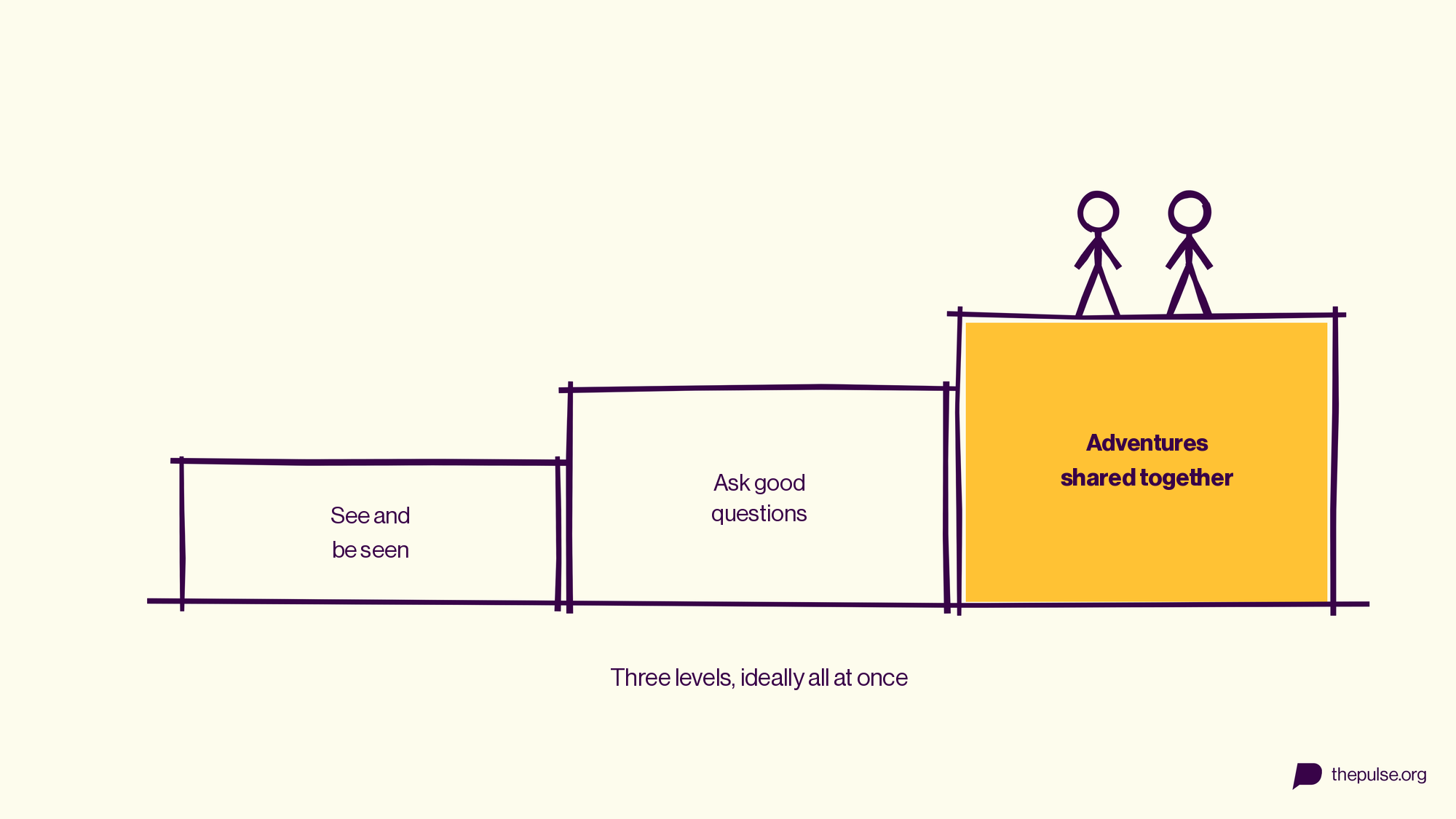
- See and be seen. I went to the cafeteria every day so the students would see me. Whoever shows up regularly becomes part of the environment. The old principle applies: out of sight, out of mind. Do you show your face regularly to the people who matter to you?
- Ask good questions. The Latin word interesse literally means “to be in between”: right in the middle of other people’s lives. The Greek opposite is the idiotes: someone who doesn’t want to know anything about the life around him. Either you take an interest, or you are, in the Greek sense, an idiot. So: don’t be an idiot, ask good questions.
- Share adventures together. Shoulder to shoulder. Laser tag, trips, the places you go anyway. That’s where the “remember when” stories come from that relationships live on for years.
Rhythm, rules, rituals
If you want to build not just individual relationships but a real community, you need three Rs:
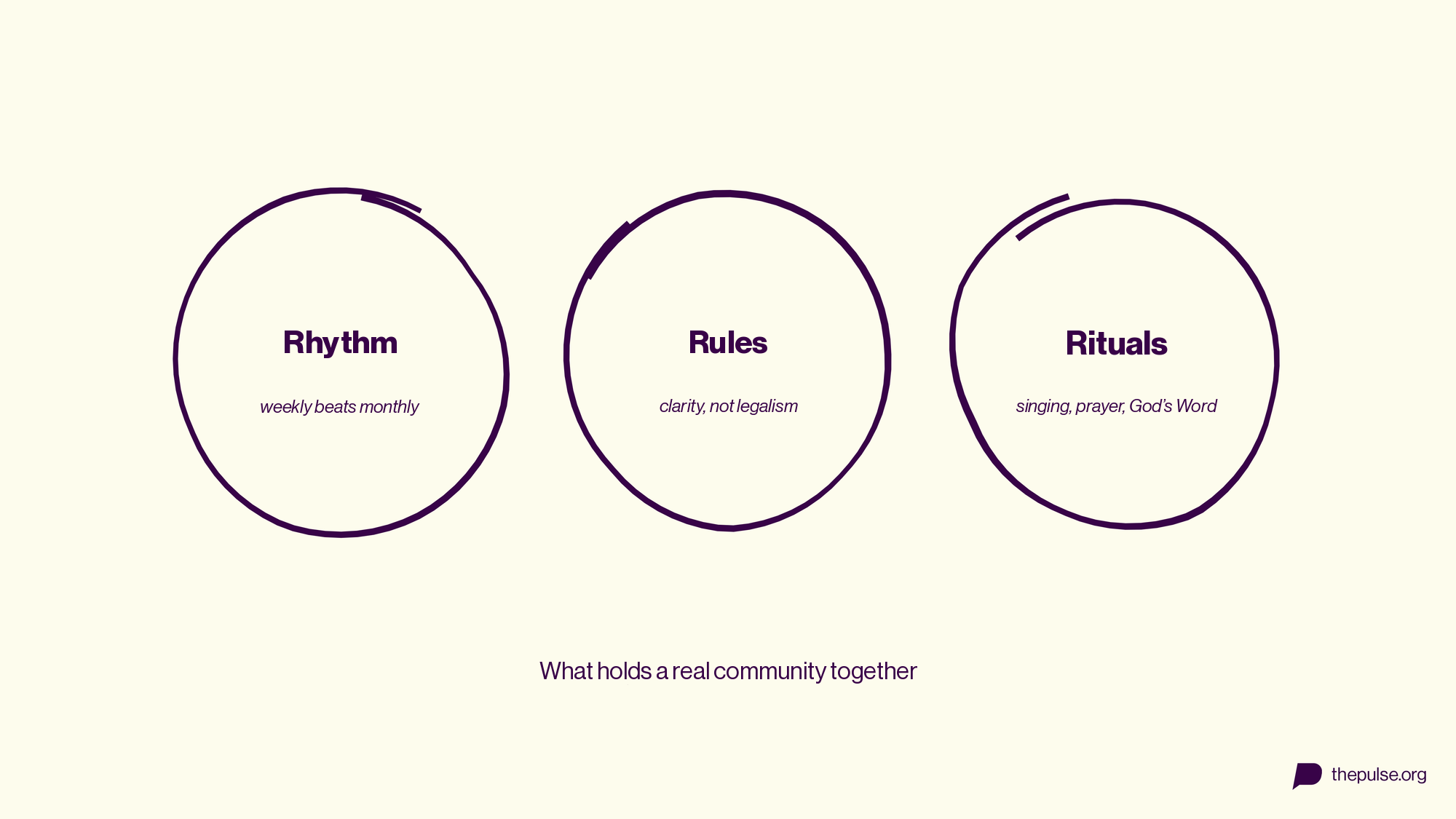
Rhythm: Weekly is ideal. Every two weeks gets hard, monthly is almost impossible. Most youth ministries don’t fail for lack of ideas, but because they didn’t keep a good rhythm long enough. Rules: By that I don’t mean legalism, but clarity. Like at a house party where you don’t know whether to take your shoes off: without known expectations, nobody feels at ease. Communicate how you do things: we’re on a first-name basis here, we want the best for each other. Rituals: When we come together, we sing, we pray, we open God’s Word and we strengthen each other in following Jesus.
And one more thing I especially want to call out to our generation: God gave you a body. Use it for discipleship. We live everything in our heads and on screens. But when Jesus prays, he kneels, he lifts his hands. Try praying out loud. Build relationships shoulder to shoulder instead of over a video call.
Priority 3: God’s Word
Jesus constantly quotes Scripture. In his very first week, the disciples recognize him as the one “Moses wrote about in the Law” (John 1:45). Why is this so important for us? Because the Bible contains a worldview that runs completely counter to that of our culture.
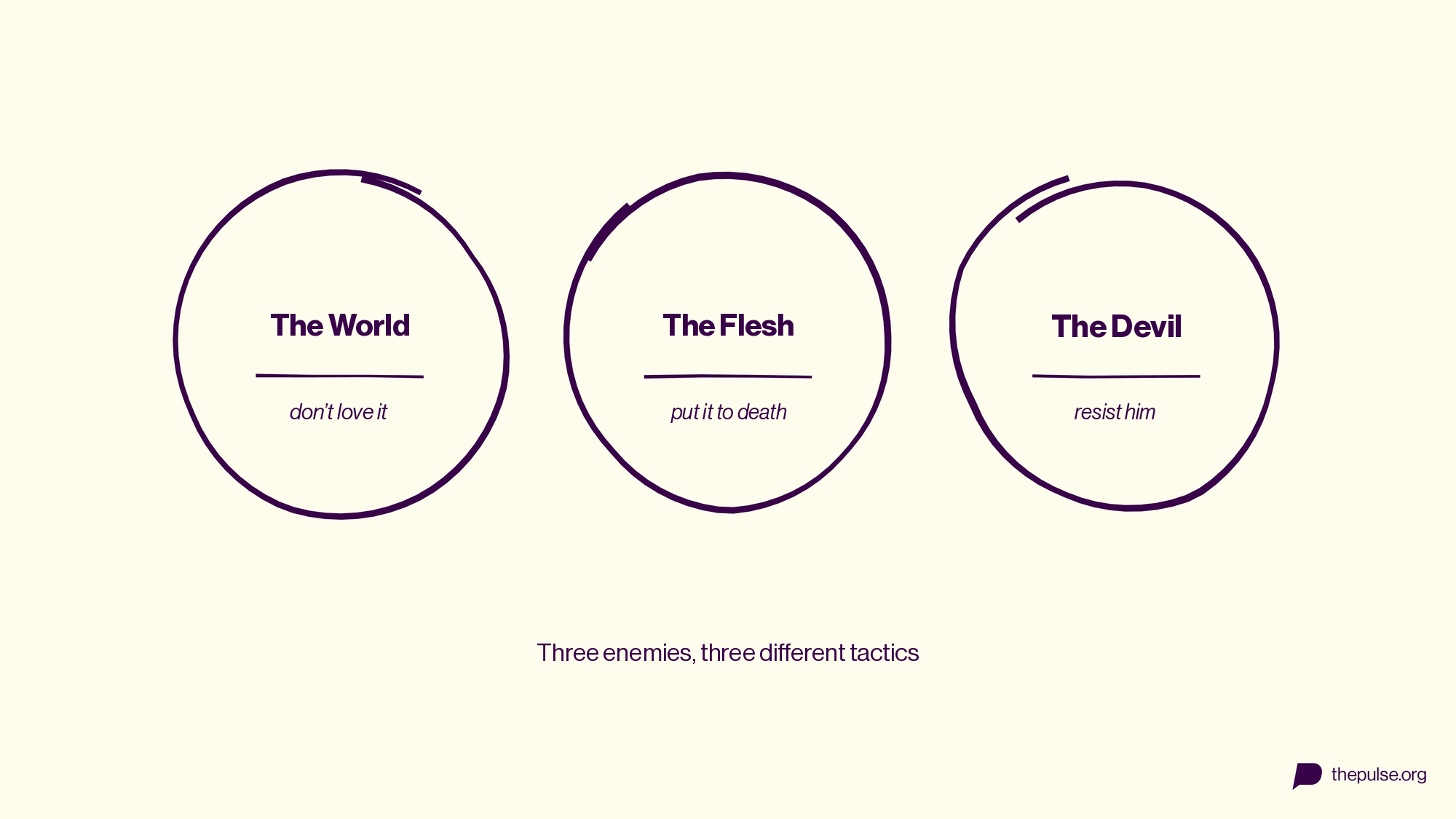
One example: The Bible describes three enemies that we are to face with completely different tactics. The world, the God-hostile system of status-seeking and hedonism: you are not to love it (1 John 2:15). The flesh, the old patterns of behavior: you are to put it to death by the Spirit (Romans 8:13). And the devil: you are to resist him, and he will flee (James 4:7). You can’t kill the devil, and you can’t make the world flee. Whoever doesn’t know the Bible mixes up the tactics.
And when you teach the Bible: don’t just preach truth into the room. Answer the questions young people actually have. For that you first need the relationship, because only in the relationship do you learn the real questions. Then God’s Word becomes the best answer there is.
What questions are young people really asking right now?
That’s exactly what Pulse delivers to your inbox: the trends and questions of the next generation, with a Christian perspective and ready-made material. Free.
Priority 4: Vision
As a child, Diana Nyad stood on the beach with her father, and he told her that her name meant “water nymph”: swimming was her calling. That vision never let go of her. Again and again she tried to swim from Cuba to Florida and failed, until she made it at age 64: more than fifty hours straight, through swarms of jellyfish, half dead, but she arrived. All because someone had once told her what was inside her.
That is exactly what Jesus does. He meets Simon, a fisherman with money problems who often speaks before he thinks, and tells him at their very first meeting: You are Peter, the rock on which I will build my church (John 1:42; Matthew 16:18). From that moment on, not immediately but step by step, his life runs on a different track: away from the old Simon he would have stayed, toward the rock.
This is how you communicate vision to young people: First say, “I believe a different life is possible for you.” Make it thinkable. “I can picture you becoming a really good worship leader one day.” And then phrase it like a shoe: “I’ve got a shoe here for you. Try it on. Does it fit?” That way you take the prophetic pressure out and still give direction.

And pray that God shows you a vision for every single person in your group. By the way, I don’t believe God pins you down to one specific job and that your calling is lost if you miss it. It matters far more to him that you stay close to his heart. There you have a lot of freedom.
Priority 5: Love
A friend of mine started an underground music club at his church. Every Friday, 70 or 80 teenagers from town showed up who had nothing to do with church: dressed up, smoke breaks, the whole package. It went great. Then he brought in his church kids. They came exactly once, handed out legalism (“You can’t smoke here!”), and the 70 or 80 never came back. They had felt rejected, because they hadn’t felt the love.
This is the priority everything hangs on. And it shows in whether we pass on to young people the three best answers in the world, to humanity’s three biggest questions:
Who am I? I am enough, because of what Jesus has done for me. The strong word is enough: nothing to prove, nothing to earn. Where do I belong? To the people of God, to the people who, like me, have been called to Jesus. What difference can I make? I am invited to take part in God’s bigger story.
All three answers have one thing in common: I am taken out of the center of my universe, and God is put there instead. I don’t have to make something of myself. And honestly, that gives me enormous peace.
Your questions from the Q&A
How do I even reach young people today?
Building relationships always stays the same: see and be seen, enter their world. The word for it is incarnational: Jesus became human and pitched his tent among us (John 1:14). But the path has changed: young people today are alone an unusual amount of the time, screen time is rising, classic risk behavior is falling. Most people who come to faith today have their first touchpoint with a Christian creator, then come to an event, and only after that to a church. The funnel has changed. For you, that means: stay with the people around you, build relationships one on one, and pray that God opens doors. Trust that the Holy Spirit is preparing people for you.
How do I pass on values to children (ages 7 to 13)?
The same truths, phrased for kids, and over and over again. Our four children are adopted, they are Roma, and the hardest thing for them has been their skin color and the stigma of our culture. What we tell them again and again: You are enough, because of what Jesus has done for you. Not your ID card, not your skin color, not your performance gives you significance, but Jesus, and he gives every one of us the same amount.
What do I do with unreliable teenagers?
First the hard truth: this is a culture question, and you don’t change culture in a day. You can communicate higher expectations (“Serving is a privilege”), but if you overtighten the screw, you breed a snobbish church. I believe in the other way: the relationship has to be strong first. Someone who knows you are truly interested in them follows you gladly, and lets you know when they can’t make it. And often the real problem isn’t that people are unreliable, but that our programs have run wild: they provide shade and keep the machine running, but they don’t bear fruit anymore. We know the sunk-cost effect: we’ve already invested so much, it has to keep going. Sometimes the bravest decision is to prune programs back and invest the freed-up time in relationships. I know how challenging that is. But that’s exactly where the culture starts to change.
The book behind this talk
- Ministry Foundations by Dave Patty analyzes the first 18 months of Jesus’ ministry and the six habits that shaped his culture, including a self-evaluation for your team. We have trained more than 8,000 leaders in Europe with it; it is used at Bible schools and seminaries from Germany to Lviv. Write to us through our contact form and we’ll tell you how to get a copy.
This might help you too
- Our live trainings for your team
- 10 group games I’ve been pulling out of my pocket for years
- Games for your group, filtered by size, location and materials
English version: September 2026
No more guesswork.
Fresh ideas and ready-made material every week for everyone who walks alongside young people. No spam, unsubscribe anytime.