One of the saddest reasons
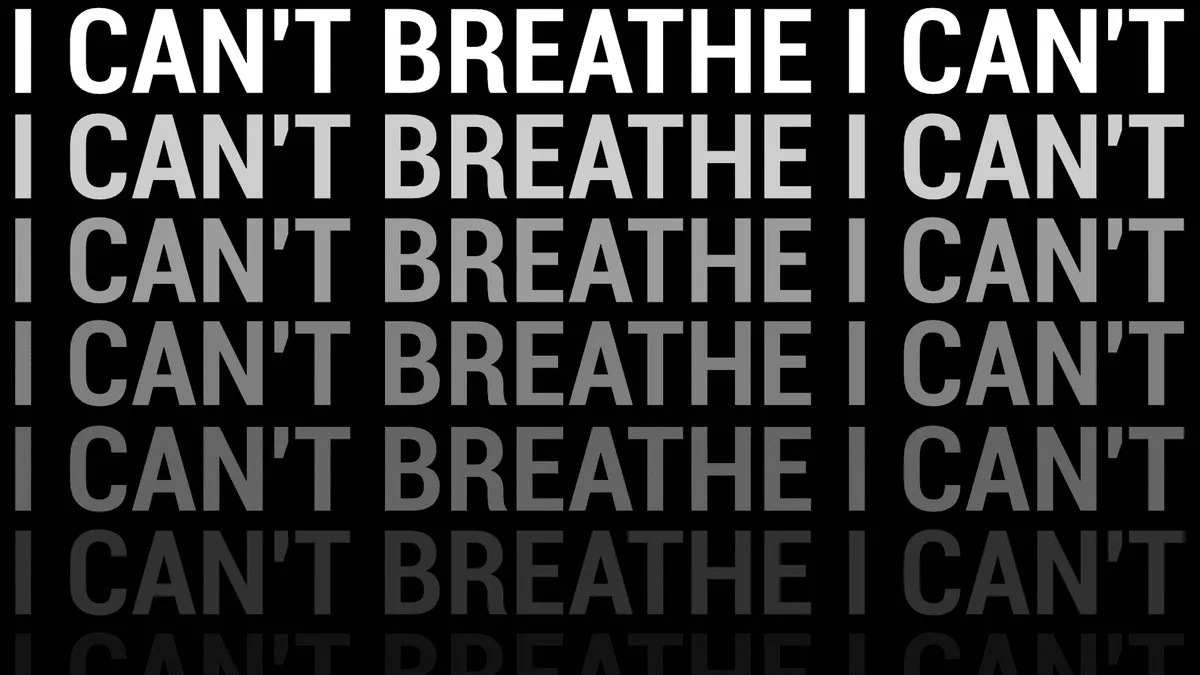
One of the saddest reasons of all to engage with a topic is the death of a person. The completely senseless and apparently deliberate murder of a person by a police officer. A person who lay defenseless on the ground and suffocated in agony. A person who suffered unimaginable injustice and is now dead. Dead because he had black skin. George Floyd.
It’s not only sad but enough to make you despair when the President of the United States of America, the president, mind you, of all the people in that country, has so far stood out more for racist remarks than for any effort at reconciliation. When this president threatens to send in the military if the protests against police violence, injustice and racism don’t stop. When he has police officers tear-gas a path for him to a photo shoot in front of a church, Bible in hand …
Actually, despair isn’t the only thing stirring in me. As I write this, I notice how repulsive I find this behavior, and I keep having to fight back tears.
#blacklivesmatter
On the other hand, they’re there right away: the critics of police violence, of the racist president and of the racist history of the US in general. Suddenly my Instagram feed was full of black “pictures” with the hashtag #blacklivesmatter. That’s good, that’s important, that’s right. And yet it leaves a bad taste in my mouth. Why?
Because I find it incredibly sad that we still have to make it clear that “Black lives” are valuable. Shouldn’t that simply go without saying, and isn’t it completely irrelevant what color someone’s skin is?
But apparently we can’t get rid of racism. Racial conflicts will dominate the US election campaign, and unfortunately it’s all too likely that Trump can win the election precisely because he’s acting in racist ways. The question of whether Germany and German culture can cope with around 1 million refugees coming into the country has occupied politics and society for a good five years, and it has led to more than one burning refugee shelter.
According to a study by the European Union Agency for Fundamental Rights, one in ten EU citizens of African descent who have experienced racist violence name police officers as the perpetrators.
So is racism maybe just part of being human? Can’t we help it? Do we have to hate other people for some reason in order to feel good?
“I have decided to stick with love. Hate is too great a burden to bear.” (Martin Luther King Jr.)
Then aren’t we all most likely racists? You and me too? Are we perhaps (partly) to blame for the fact that racism exists among us today? In the end, is it not the “Nazis” who are the real danger, but you and me, because we make racism socially acceptable?
Video on Instagram: instagram.com/p/CAqlQYFFT8N
But not me!
Racism means not meeting a person without prejudice, but labeling them because of their origin, skin color, religion, etc. It means thinking that with a stranger you know from the outset what they think and do, and that it can’t really measure up to my level.
You don’t have a problem with that? Then here are a few examples for you:
- What people who look “sort of Asian” have experienced since the coronavirus outbreak in China is shameful. They have been avoided, insulted, yelled at and, when they got too close to certain people, thrown off buses. Our fear of infection is racist (this works with other diseases and nationalities too, by the way).
- How often do you hear teenagers in the schoolyard insulting others with “You Turk!”, “You Jew!” or the like? Using a nationality as an insult: racist.
- Repeatedly putting a banana on the desk of a classmate from Africa or making monkey noises behind his back: racist.
- “Knowing” that young Syrian men are all terrorists and rapists anyway: racist.
- Assuming that a woman in a headscarf coming toward me in a hospital hallway is the cleaning lady and not the doctor on the ward: racist.
- When you’re surprised that a person with darker skin “speaks the language so well” and want to praise them for being “well integrated”: racist.
- Asking people who “don’t look like they’re from here” where they’re “really” from: racist.
- Acting as if your country were so open-minded that there simply couldn’t be any racism: racist (and pretty ignorant).
- Refusing to acknowledge your own privileges as a white person and denying them: racist. Food for thought, with an aha moment!
- Ignoring that quite a few slaves work for your lifestyle, that is, directly for you: racist. (How many slaves have to toil for you? Take the test here.)
This list could go on forever. It already makes it clear: our society has a big racism problem.
But I didn’t mean it that way!
Many people are probably not even aware of their racist behavior. On the one hand, that may be because almost all of us were socialized this way, more or less. I grew up, for example, with the “Negerkuss” (a chocolate-covered marshmallow treat named with a German racial slur), the “Schokoladenmohr” (a chocolate figure of a Black man), the “black Knecht Ruprecht” (St. Nicholas’s helper, shown with a black face) and a collection box for our Sunday school’s sponsored child, on which a little “Negerkind” (a slur for a Black child; that’s really what it was called) always bowed when I dropped in my 10 pfennigs. My father “knew” that southern Europeans were too lazy to work anyway and that someone ought to teach “those people in Africa” democracy so they wouldn’t keep killing each other, and those are just a few examples.
On the other hand, it may also be because racism is noticed above all by those affected by it. If I, as a white man, don’t experience racism, that doesn’t mean it doesn’t exist.
Beyond that, it can come down to ignorance (and a lack of reflection). Anyone who has never been told that certain expressions or behaviors are offensive and racist may not consider themselves racist at all, even though they act that way.
Knowing people from immigrant backgrounds doesn’t protect me from racist behavior and ideas either. After all, just because I talk with women doesn’t automatically mean I’m not a sexist.
OK … wow
Anyone who is honest with themselves will quickly realize that everyone has racist tendencies. And wherever they come from, we have to work on them. It’s a human “no-go” to discriminate against others, put them at a disadvantage or even use violence against them because they look different, come from somewhere else, dress differently, believe differently, etc.
Anyone who is even more honest with themselves has to admit: we white people, and especially the white men among us, have all the privileges. We have the most money, the most power, the most freedom, a loud and weighty voice, and we live with the assumption that the world is there for us. That means that in the end, it’s us who help make sure that others in this world are oppressed. That others have less money, power, freedom, voice and claim to the world than we do.
“If you are neutral in situations of injustice, you have chosen the side of the oppressor.” (Desmond Tutu)
We are the racists. Racism is our problem. We let this problem come about. A problem we have to solve!
We have to understand that all people are equal. Equally important, equally valuable, equally created. We have to learn to love diversity, to see that variety makes life beautiful, exciting and rich. That what is foreign to us lets us discover new things, helps us learn and lets new community grow.
It’s up to us
What can you do? You yourself can stand up for equality, justice and solidarity. You can try to live in a way that doesn’t automatically oppress people. You can pray and ask God for mercy. You can speak up when you witness racism. You can intentionally get to know people who are victims of racism and listen to them. You can resolve today to declare war on every racist tendency in you.
You can set out with your teenagers to discover what racism is and what it does. On the way to facing your own privileges and meeting the victims of racism. On the way to solidarity, equality and truly humane behavior.
We can be the beginning of the end of this disgusting scourge of humanity. Let’s start ending racism NOW. Everywhere we are.
Pentecost is the anti-racism feast
This past weekend we celebrated Pentecost. A completely underrated feast. At Pentecost, God tears down all borders and makes it possible for people from the most diverse corners of the world to meet as equals and understand each other. He makes it possible for strangers to become friends.
Because God knows his people and knows that on their own they find it really hard to love all people the way he intended, God sends the power of his Spirit to people. And that power enables us to love, even strangers and those who are different. It enables us to be a community, a church, that loves without limits.
That is so beautiful. And so important. And so necessary.
Let’s live it!