We’re thrilled that you want to start a youth ministry! And thank you so much for your valuable questions.
It’s great to see how much thought you’ve already put into this. It shows your heart for youth ministry. Starting a youth ministry can feel overwhelming at first. How should you begin? That’s exactly the question you’re asking. I can imagine that you’re already in the middle of starting a youth ministry, even if nobody calls it that yet.
Youth ministry is first and foremost about relationship building, which means it begins where we live in relationship with teenagers, without a fixed program. The program supplements and enriches the relationship building that is already there. (Esther Penner)
The heart of youth ministry is relationship building
That’s where youth ministry starts. At the beginning of the year, we published a post on our blog about exactly that: how to start small and still get big results. Youth ministry is first and foremost about relationship building, which means it begins where we live in relationship with teenagers, without a fixed program. The program supplements and enriches the relationship building that is already there. Personally, that took the pressure off me to produce something special. When I go out on the street and look for contact with teens, the point is to build relationships and to live them out. That helps me stop looking for ways to get teens into my youth ministry or to build an attractive youth ministry, and instead look for ways to bring youth ministry to teenagers. And by meeting teens where they are and creating a space where they can simply be, I’m doing youth ministry. A relationship with teenagers is youth ministry all by itself. As we walk alongside teenagers in relationships, it also becomes clear what a youth ministry with a regular program could look like.
Reflection questions for the program side
It’s important that you gather your thoughts on these questions on a whiteboard or poster and visualize them. Priorities will start to emerge from that. At the same time, it gives everyone the chance to voice their expectations and dreams and to hear those of others. That broadens your perspective and makes you more attuned to the team. That is very important at the beginning. After all, your youth ministry is made up of its volunteers and what they bring with them.
- What makes the teenagers you spend time with tick?
- What are their interests?
- What do they need?
- What do they like to do?
- Who do they spend time with?
- What do you wish for them?
- What do you dream about when you think about youth ministry?
- If time and resources were no object, what would your youth ministry look like?
- What role would each of you play in this youth ministry?
- What skills and interests does each of you bring?
- What makes your hearts beat faster?
Define your group culture
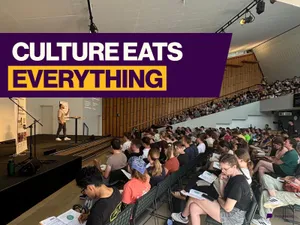
Be aware that when you start a youth ministry, you’re also establishing a group culture. That raises the question: what should the teenagers in the group experience together? What values do we want to instill as volunteers? How do we want to shape that together? Which team values matter to us? Take plenty of time for these questions. Set aside a whole weekend and go somewhere nice, partly so that you have the time to answer these and similar questions together and partly to plan shared activities so that you keep growing together as a team. As leaders and volunteers, you’ll shape the group culture through your example. How you communicate with each other, how you resolve conflicts, how you approach projects and carry them out will shape the teenagers in your youth ministry. One value I picked up from working on a team, for example, and which spared us a lot of trouble, is this: We think the best of each other until proven otherwise, which means everyone gets trust up front and prejudice has no place. Talking behind each other’s backs doesn’t happen. And that immediately makes room for authentic relationships with one another. This value is completely countercultural, so it’s also a challenge to make it something people can experience. When the team lives this value, it smothers destructive patterns of behavior right away and creates a culture of trust. That is essential for a relationship-centered youth ministry.
We think the best of each other until proven otherwise, which means everyone gets trust up front and prejudice has no place. (Esther Penner)
That doesn’t fully answer your questions yet, but I hope these answers help you with your next steps. And if you have more questions, feel free to write to us again.
Good resources for starting a new youth group
Through our newsletter, you get insight into current trends and topics of Generation Z. The newsletter also brings you relationship questions that help you start conversations with young people about current topics.
As training for your volunteers, I recommend the book Your First Two Years in Youth Ministry by Doug Fields (only available used now).