
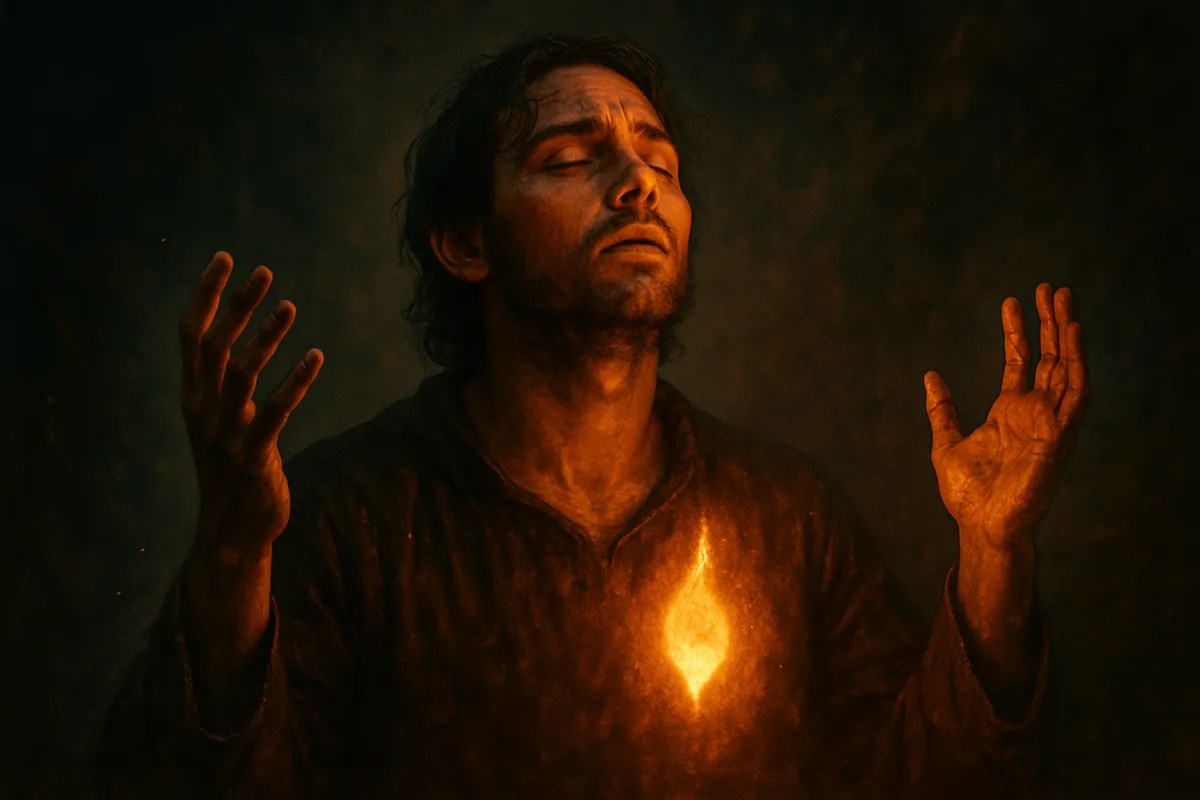
Faith should give you strength, not burn you out. But many people experience something different: they try to give more and more, wearing themselves out for God, for the church, for youth ministry, for keeping the rules. And at some point, all that’s left is exhaustion. Healthy spirituality looks different. It connects instead of weighing you down. It strengthens instead of draining you. It invites instead of demanding.
Here are seven principles for living your faith in a way that does you good instead of destroying you.
About the series “🔥 Fireproof Leadership: A Survival Guide Against Burnout”
Work can be fulfilling, but it can also drain you. Many leaders burn out because they’re constantly giving, sacrificing themselves for others and ignoring their own limits in the process. This series helps you spot the warning signs early, live out your idealism in a healthy way and stay stable for the long haul through self-care.
- Fire Alarm: The Most Radical Step in Dealing with Burnout: Don’t Fight It
- Smoke Signals: Why You’re at Risk of Burnout as a Youth Leader
- Embers and Ashes: Why Do the Best Burn Out? Idealism and the Trap of Self-Sacrifice
- Shield: Self-Care Is Not a Luxury: Seven Ways to Stay Healthy
- Campfire, Not Wildfire: Healthy Team Culture: Share Responsibility Instead of Wearing Yourself Out
- Rekindling the Fire: How to Get Back on Your Feet After Exhaustion
- Fuel for the Soul: Healthy Spirituality: Living Your Faith Without Burning Out
1. God is not a taskmaster
There’s a subtle but crucial difference between devotion and giving yourself up. If your faith drives you to do more and more, to be better and better, to achieve more and more, it’s time to stop and pause. God isn’t a taskmaster who drives you on. He’s the one who invites you.
2. Your worth doesn’t depend on your performance
Especially in Christian work, there’s a big risk of defining your own worth by what you do. But you aren’t valuable because you do a lot for God. You are valuable because you are.
3. Prayer is not an obligation
Sometimes praying turns into a to-do list: quiet time, devotionals, Bible reading plans. But prayer is not a competitive sport. It’s encounter, dialogue, being present before God.
4. Spirituality needs freedom
Not every spiritual practice fits every person. And that’s okay. What matters isn’t that you do something “right” but that it nourishes you.
5. Boundaries are spiritual
Jesus withdrew to pray. He said no when it got to be too much. Why should we think that we have to, or even can, keep performing nonstop?
6. God meets you in the silence
When everything gets to be too much, silence is often the most healing thing. No musts, no shoulds. Simply being.
7. Receiving God’s perspective as a gift
Sometimes we’re so caught up in our own expectations, worries and plans that we can no longer see the big picture. Time with God can help us discover his perspective, and that takes the pressure off. Suddenly we feel his love for the person who’s annoying us right now. We recognize his bigger plan in situations we’d rather solve right away with lots of energy and action. And we experience his grace for everything we don’t get done or have gotten wrong. We are held, no matter what we achieve or fail to achieve.
Your faith is allowed to do you good
God doesn’t want your faith to break you. He wants you to find life through it. Healthy spirituality means you’re on the road with God, not as a duty but as an invitation.