They play. A lot. On their phones, on the train or on the console at home. Games are part of our lives. From casual games to complex, never-ending role-playing games. Like movies and pop culture, games draw on our society and the issues it deals with. Well-made movies, series, books and games, too, can mirror these issues back to us and confront us with them. While entertainment media like TV series offer a progressive picture of how society lives together and of gender roles, video games long seemed stuck in the past when it came to portraying men and women.
Video games fuel stereotypes
Example: League of Legends (post on Instagram). The portrayal of women in video games is often based on sexualized stylization.
In general, the aesthetic portrayal of women in video games is often based on stereotypes and sexualized stylization. Women are reduced to oversized sexual features and very little clothing. Male characters are portrayed stereotypically too, but idealized rather than sexualized. They have muscles and heavy armor, and they’re taller than average. Female characters are also given fewer abilities and skills.
Example: League of Legends (post on Instagram). The portrayal of men in video games is often based on stereotypes. They have muscles and heavy armor, and they’re taller than average.
Beyond the aesthetic portrayals, there are also structural inequalities in how the main characters in games are distributed. Women are still far outnumbered when it comes to protagonists. And in the roles written for them, they’re the ones who need to be rescued by their male heroes.
Signs of a turnaround
But in recent years, a more positive trend has emerged that is steadily improving the image of women in video games. That shouldn’t hide the injustice that still exists, but it does show a path the video game industry has taken. One reason is the greater diversity that society reflects and that video games, like other markets, respond to. Examples of games with diverse characters and genders are “Horizon Zero Dawn,” “Last Of Us II” and the current game “Tell Me Why.”
3 practical applications for your youth ministry
Offer low-barrier spaces to play
Through my involvement in the church, I’m regularly invited to speak at youth groups and other churches. Besides my actual topics, we also end up talking about personal things. “Gaming” almost always came up. But often with the caveat that it was “just” a private pastime and had no place in youth ministry. Sometimes there was shame attached, as if it weren’t very Christian. As my points above show, there really is something to the criticism of gender clichés and sexism in games. And still we need to talk about gaming, because it’s present, to a greater or lesser extent, across society, in every age group and every social setting.
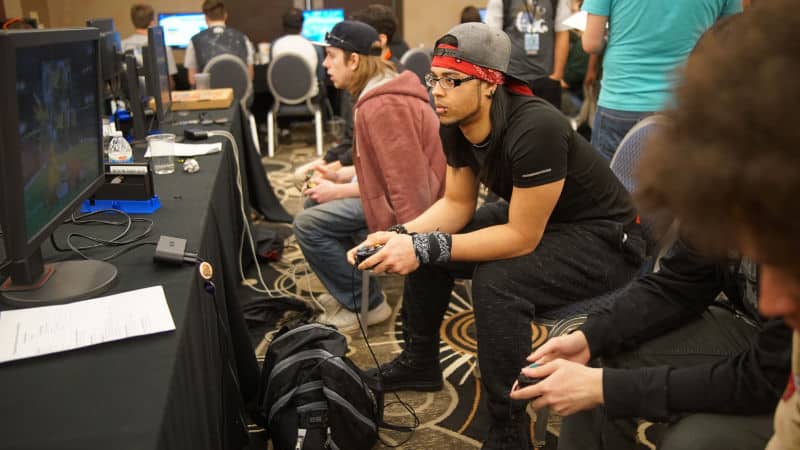
Offering spaces to play in youth ministry means always giving gaming a place that is embedded in the rest of your program. Please keep in mind that not every game is suitable for every age and that youth protection laws need to be followed. For example, in esports tournaments, teenagers can
- play soccer against each other in FIFA or Rocket League,
- dance together in Just Dance,
- hunt each other down in battle royale games like Fortnite or APEX Legends
- and show off their driving skills in casual games like Mario Kart. Or sharpen their skills with 8 players in Super Bomberman R.
Gaming as a shared experience in youth ministry gives this pastime the space it takes up in teenagers’ everyday lives, and it shows that youth ministry is interested in the reality of their lives. The quality of these relationships largely determines the quality of the conversations and the trust between leaders and the young people who come. When we as leaders and volunteers deliberately engage with youth culture and video games, look for points of connection and are willing to get into the experience of playing, the conversation spaces that follow will be all the more fruitful.
Guide inclusive conversation spaces well
Volunteers and professionals in social work or Christian youth ministry can offer spaces for open, constructive but also ambivalent conversations. Workshops or seminars about video games are one option. Participants get the chance to talk with each other about their gaming experiences and views. A seminar like this needs enough preparation time and clearly defined content that leaves room to discuss experiences with gaming.
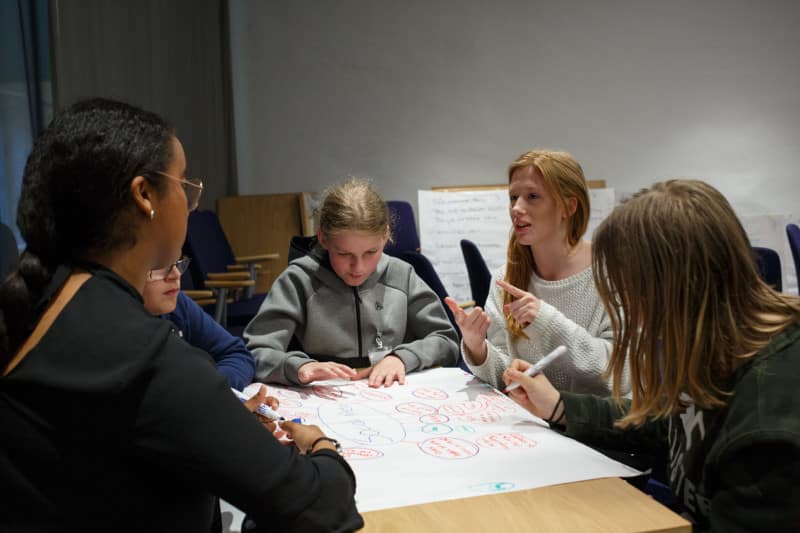
I think offering a discussion group is mainly about a reflective, observant and interested attitude toward teenagers.
- What do they play?
- What fascinates them about their favorite games?
- How do they experience unfair portrayals of characters in games?
Another important topic is their own experience of (sexual) harassment in online multiplayer games. As early as 2012, the German site netzpolitik.org published an article about it (in German), drawing on experiences within an online community.
A few weeks ago, the German weekly Die Zeit reported on a growing group of women who spoke out about harassment in the gaming scene (in German). It could even become their #MeToo movement.

In these conversation spaces, you can discuss ways female gamers can protect themselves from this kind of abuse and fight back. One idea is solidarity: joining up with other women who want to play together. Organized through websites and Discord channels, female gamers experience solidarity there and can question the patriarchally structured space.
With this part of the conversation, we build on the theory that learning is an experience that can only be reflected on as it happens. That opens up the chance to reframe things we’ve learned, some of them unconsciously, and to talk about them. This part of the conversation alone could be the beginning of a new process of relearning, which in turn can be reflected on later.
Where do teenagers encounter different, non-stereotypical gender roles? Is it media that shapes them, or do they have people around them who can reflect this diversity back to them?
Do they read the Bible as a book that has the power to transform existing social conditions, or is it a backward-looking view of life and society for them?
Try open spaces for experimenting together
Character design matters a lot to players. Games make it possible to slip into new and sometimes unfamiliar roles. Players can identify strongly with the roles they create themselves. Even after many years, the game series “WoW” and “The Elder Scrolls Online” are still especially popular. Millions of players worldwide create their very own characters, play as the other gender and devote themselves to their personal skill tree, which makes the virtual character unique. Teenagers don’t carry the roles they play in games straight over into everyday life. It’s more that they get to try themselves out in other, new roles. The more varied these experiments are, the broader the learning experiences that can come out of them for teenagers. Talk with your teenagers about role expectations, clichés and images of gender.
Questions for your teenagers:
- What do they associate with the role they take on?
- Does it make a difference to them whether they play a female or a male character?
- What strengths does the character have because of its gender?
- What would they like to change about their game in this respect?
These spaces aren’t meant to be the final word. They’re meant to open up ways to take a close look at gaming, images of gender and sexism, and to face these topics.
Further reading: