
“I won’t be leading this group after summer break …”
The Easter break was over, and I knew I had to say this sentence to my teens that day, because I was changing jobs and moving a few hundred kilometers away. How would the teens react? Would they be angry with me? Would they feel abandoned? Who would take over the leadership? The group might fall apart if no one stepped up. Lots of questions were racing through my head, but there was no way around it: I had to prepare my teens and start the closing phase of this great group.
How do we start the closing phase of a group?
Ideally, we always lead a group with the goal of preparing for the transition, whether that’s the move from one group to the next or handing over the leadership. But there are exceptions, for example illness or family or personal situations that make a good handover or closing phase impossible because there’s no time for it.
In this article I’ll show you how to plan the handover or closing of a group, start it well and constructively with enough time, and bring the group to an end.
Groups, whether of children, teenagers or adults, always move through different group phases, which can be longer or shorter depending on the situation. If your group is in its last phase and the natural development of the group shows that it should come to an end, or there are reasons why you can no longer keep leading it, you can proceed like this:
Announce the end well in advance
Try to give the group and yourself 3 months to prepare and explain the why: Why does the group have to end?
- Maybe the reasons are personal to you as the leader (health, time management, a career change, family …). Most of the time we can’t control how our lives develop. Stand by the changes and be honest with yourself and with others.
- Maybe the end was planned from the start, for example with a Bible class or a confirmation class. The group naturally outgrows its age range: the teenage years end and students move up to the older youth group, or youth group ends and a group of young adults or a home group begins.
Inform your church leadership and keep them in the loop. Explain the reasons for the end. Why does this matter? They are responsible for the whole church, and so for you and your ministry in the youth group. That builds a culture of openness and transparency and avoids misunderstandings that could affect the process negatively. So seek out that conversation as early as you can.

Bring the parents on board too. Let them know what comes next. Answer their questions and address their concerns. Be open about your reasons here, too. If tensions come up, the church leadership will be able to back you up, because they’re already informed.
Set the transition in motion
If a transition is possible (that would be best), set it in motion. In doing so, answer the question “What comes after this?”
Build connections with the next group
Organize events or activities where the teenagers from the old group, the teenagers from the group they’re moving into, and the leader of the new group can get to know each other. Use shared activities as bridges so the teenagers can build new relationships. At the same time, that gives them a sense of security as they move into a new environment.
Focus your topics on their relationship with Jesus
In this closing phase, don’t start new topics that get really deep again and can’t be brought to a conclusion, such as how to cope with parents splitting up, mental health, sexual ethics or relationships. Avoid those topics now, the ones that crash right into the teenagers’ everyday lives. They should have been covered and wrapped up well before the transition phase. Especially during the transition phase, it’s important that the teenagers are in a safe and stable environment.
So wrap up any topics that involve pastoral care beforehand. Don’t open up topics that make the teenagers bond with you all over again as their go-to person, because then pastoral care is under way. If you now step into an emotional topic as their leader, they will have a hard time letting go of you as a person. After all, you want to make the process of letting go as easy as possible for them.
Pastoral care is welcome to find its place again in the new group, but during the transition phase it isn’t helpful.
So concentrate on the biblical truths you still want to give them for the road ahead, truths that help the teenagers deepen and strengthen their relationship with Jesus. But if a crisis pops up for one of them during this phase, support that teenager one-on-one, outside the group. That way you keep encouraging the group’s process of letting go while also caring for the teenager who needs it right now. Where you see it as necessary, you can also keep accompanying your teenagers with pastoral care once they’re already part of the new group. You then shape the process of letting go individually with those teenagers.
Close open topics
Give the teenagers the chance to ask open questions they still have for you personally, or that are still on their minds about the topics you’ve discussed, in a Q&A time during the last two (or more) sessions (by text or WhatsApp to the leader, anonymously through a question box, or with an online tool like Slido). You could even let them vote on the questions they definitely want answered. That’s especially useful if you’ve received more questions than you have time for. It gives them the feeling of being heard and taken seriously. This way, open questions can be cleared up with you.
At the same time, you have the chance to strengthen the bridge to the new group leadership by encouraging them to ask these questions of their new leader as well. Something like: “Hey, I think it would be really good if you asked the next leader about this. They might see it differently, and it might help you see it from another angle.” In doing so, you actively shape how they let go of you as a person and help them build trust with the new leader.
Plan reflection time for the group
During the transition phase, regularly look back on your shared experiences with the teenagers and help them tie those experiences together in a new way. Let this reflection flow naturally into your group sessions. Pick up topics and experiences as you go: “Hey, we did this once before. Remember? That was really good, and you asked really strong questions. I’m going to build on that now.” In this way, you deliberately deepen the topics you’ve already discussed.
Circle back to what has already happened. That way you bring old experiences back, give them meaning again and let those shining moments come alive once more.
You walk the teenagers through the goodbye step by step, raise the curtain on old highlights and let them sink in deeper.
Set the end date
Choose a fixed date for the actual end of the group that coincides with natural pauses in the group’s rhythm, such as school breaks or holidays. This makes the transition easier and gives the teenagers time to adjust to the coming change.
- At the start of Christmas break, or from the new year on
- Before the Easter season
- At the start of summer break
Make the last session a highlight
End the group with a celebration
Talk with the group beforehand about what they’d like and how they want to shape the ending. Organize a party with great food. Maybe everyone can bring something to eat, or you order in something special. You can also ask parents and people from the church whether they’d like to help you prepare the food.
Celebrate the memories
Put together a recap of all the highlights. For example, everyone sends 5 of their best photos to the leader, who puts them together digitally in a presentation. Celebrate the “best of” your experiences together, and build time into the program for everyone who wants to share their personal highlights: What am I taking from this time into my life? What moved or challenged me the most?
Give personal gifts
Prepare a small personal gift box for each teenager, with a few small symbolic items inside:
- A personally written card with words of appreciation and gratitude
- A granola bar for fuel and quick carbs for the dry stretches
- “Encouragement Bible verses” with God’s promises, tied together in a bundle of maybe 5 little cards. In hard times, when they need encouragement, they can pull one out of the box
- A tea light as a symbol of the light of life that shines when we walk with Jesus
- etc.
Bless them and send them out
The flow of the last session has to be clear and has to communicate plainly that the group is really ending. For that, I recommend a time of blessing, in which you, as the leader, bless the participants and send them out spiritually for whatever comes next, whether they’re going into a new group or it’s completely over for them.
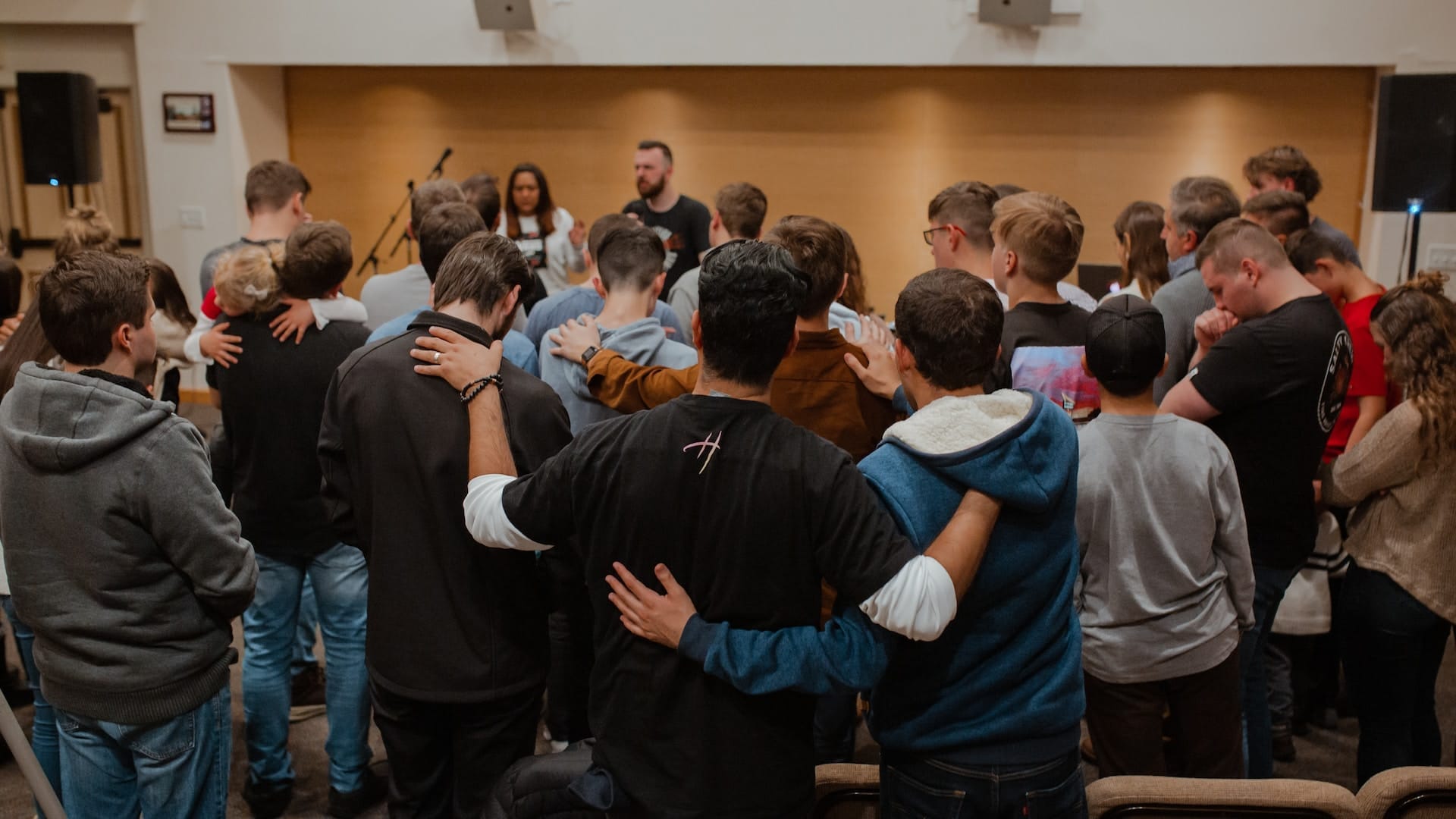
God takes care of them. He is the direct point of contact and companion for our teens and young people.
Celebrate the end with your volunteer team too
After the last session, meet once more separately with your volunteer team and hold a small closing celebration or closing circle of your own, just for the team. Depending on your setup, you can thank your team with a small gift and here, too, write a few personal words to each person on a card.
Here, too, it’s good if every team member can give personal feedback on this time: a look back at the highs and lows and at the lessons each person takes away from serving on this team.
Your appreciation and gratitude are very important here too, so that your volunteers will gladly serve somewhere again in the future and put their gifts to use.
Allow it to get emotional, and if a few tears flow, that’s part of it. To finish, close this circle together as a team with a time of prayer and blessing, and put everything into God’s hands.