
In recent years, we’ve been living through a pandemic of depression, anxiety and despair among children and teenagers.
DAK Children and Youth Report 2022 (Germany)
2021 vs. 2020 (report by the German health insurer DAK, in German)
- 42% more children and teenagers hospitalized for an emotional disorder
- a threefold increase in suicide attempts among 12- to 17-year-olds
- among 15- to 17-year-olds: more emotional disorders
- among 10- to 14-year-olds: more depressive episodes and anxiety disorders
- among 5- to 9-year-olds: more disorders of social functioning and more developmental disorders
But just as the book isn’t mainly about the bad news, this summary isn’t about highlighting the bad news either. So let us take you on a journey of hope, with lots of practical ways to bring healing to children and teenagers.
The feeling of not being seen
When a child is hopeless and sinking into negative thoughts, we tend to think we just have to push, challenge or motivate them enough to get them out of it. All the child wants is for their feelings to be understood.
But… we don’t see what they’re feeling…
So… they don’t feel seen.
The greatest weapon against despair and depression is YOU!
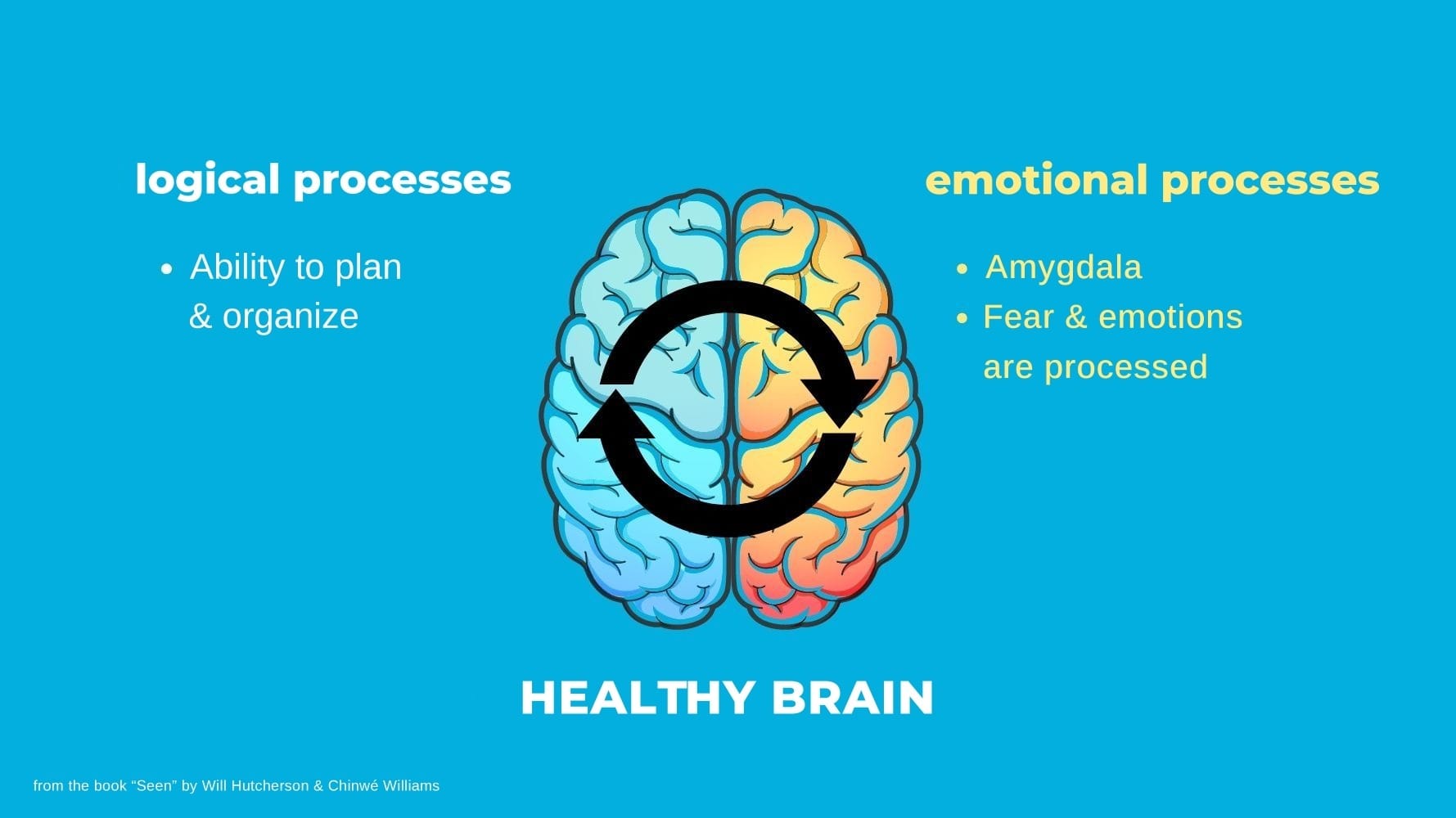
In a healthy brain, there is a constant, lively exchange between the two hemispheres. God created our brains so that we have the ability to feel a wide range of emotions and, at the same time, to analyze them logically. But when we’re no longer able to connect this logical process with our emotions, despair overwhelms us.
Despair is a state in which you feel so hopeless and desperate that you’re cut off from your own feelings.
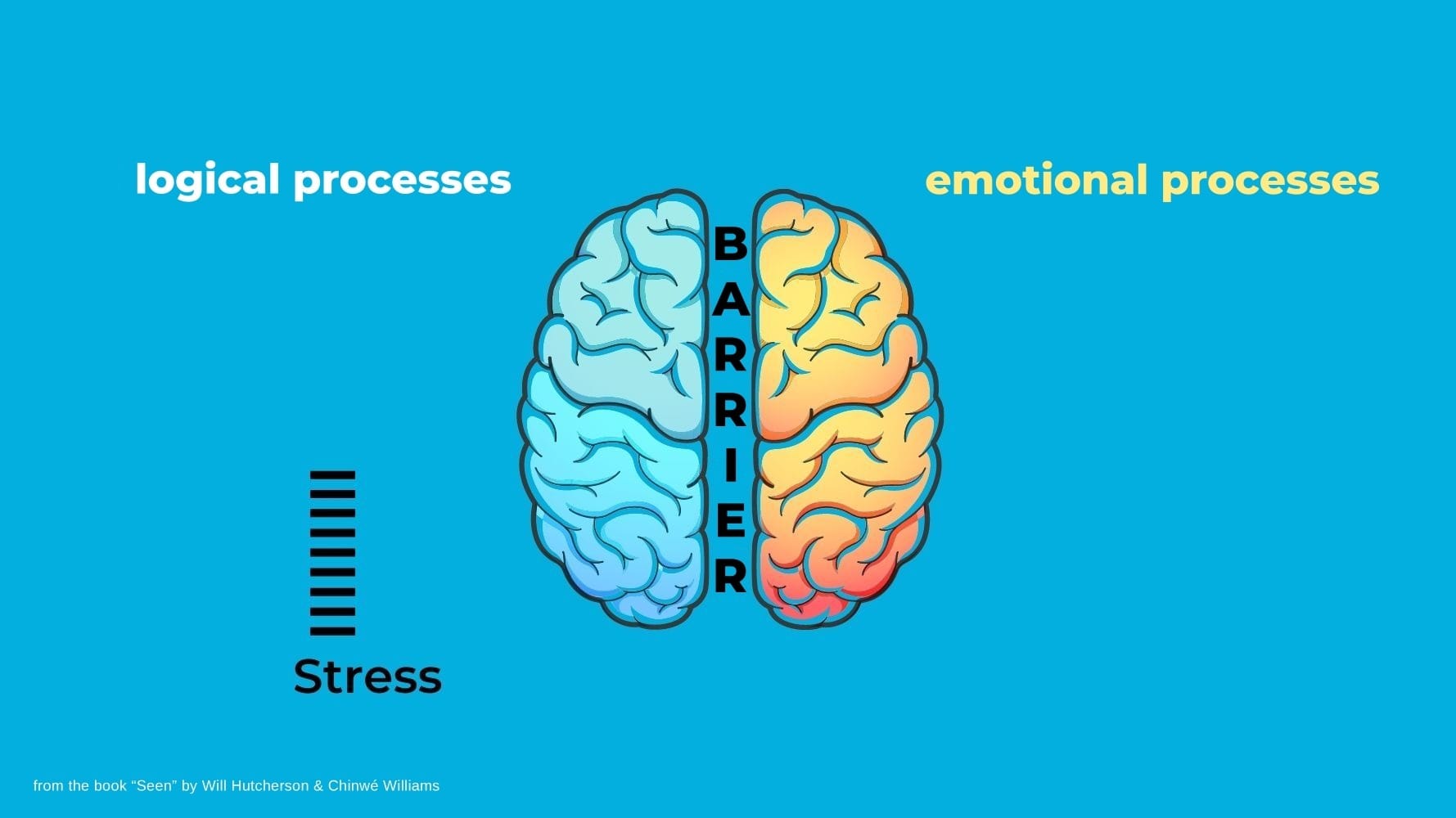
When we experience stress, cortisol (a stress hormone) is released and floods the brain. A constant release of cortisol disrupts the connection between the two halves of the brain.
When the two halves of the brain are no longer connected, we can no longer process the constant flood of emotional signals.
That explains why people who experience despair often feel numb or empty inside and can no longer connect with their own emotions. Often they can’t name their feelings clearly or put them into logical words.
People who hurt themselves are trying, on the one hand, to distract themselves from their emotional pain. On the other hand, they’re also looking for a way to wake up from their emotional numbness and find out whether they can still feel anything at all. Ultimately, people who hurt themselves are desperately trying to restore the connection between the two halves of their brain. In the short term, numbness serves a purpose: it helps us cope with extreme situations.

Studies show that our brain responds to love and empathy even in a state of despair.
How you respond to someone who is emotionally numb can ultimately help bring their feelings back to life. When we experience love and empathy, our brain is flooded with oxytocin, a hormone responsible for healthy attachment. This reunites the two halves of our brain, and despair and stress decrease. Once the connection is restored, the emotional process can flow back into a logical process.
When a child experiences despair, they often don’t feel seen. They feel alone, as if nobody understands them. The way the child sees it: I’m the only person who feels this way. When we build a relationship with this child, something important happens. We can give them the sense that they’re truly seen.
God often uses people to heal people.
Five tools
1. Show up
- Show up before you’re asked. Just because a child doesn’t show that they need you doesn’t mean they don’t need you. The older and more independent kids get, the less they ask for it.
- Show up for what matters to them. Try to find out what matters to them, and be there for it.
- Show up when it’s inconvenient. Being present means being available even when it’s uncomfortable and costs you something significant. (For example, when you actually had other plans.)
- Show up regularly. Create routines with regular moments together.
- Show up with your full attention. Kids don’t want us to just notice them; they need our full attention. They need to feel that we see them. They need us to look at them.
- Show up when they’re hurting. Jesus wept before he raised Lazarus from the dead. We tend to skip ahead to the miracle. Jesus knew he was about to perform the miracle, but he still pressed pause for a moment and met people in their feelings.
Being present is 50% of the work.
Sometimes we may not know what to say, but it’s enough to simply be there.

2. See them
Kids who act out don’t feel seen or connected. Through their behavior, they’re trying to express their longing for relationship.
In a moment of despair, we don’t care whether our feelings are logical. In moments like that, all that counts for us is that we’re hurt, sad, disappointed. The only question we have in a moment of despair is: “Do you see me?”
- Look behind the behavior. Ask yourself: “Do I know where they’re coming from right now?” Ask questions to understand the context.
- See what they’re feeling. If we jump straight to logic without paying attention to feelings, the other person doesn’t feel understood.
We need to meet logic with logic and emotion with emotion. When a child comes to me with emotions, I have to meet them there, or I’ll miss them completely.
Imagine taking a deep breath and not being able to let it out.
Processing feelings is like exhaling emotionally.
Just saying feelings out loud helps release the pressure. Kids first have to develop the ability to exhale emotionally. We can help them put their feelings into words, for example by asking: “Do you feel alone / hurt / angry / …?” When we help them exhale their feelings, they feel seen.
3. Just listen
In a moment of despair, it’s hard for a child to put their feelings into words. They need time and a sense of safety to do it. They may not express their feelings nicely or thoughtfully. It’s crucial that we don’t react with stress.
- Be a safe person. Communicate safety with both your words and your body language.
- Say little. It’s not about saying the right thing or teaching a lesson. Our presence matters more than our words. We all feel we have a lot of wisdom and experience to share, but now isn’t the right time. Instead, we can say: “Tell me more.”
- Watch your tone.
- Keep eye contact. Eye contact creates a healthy, secure attachment. (It’s one of the most important ways a mother bonds with her baby.)
- Connect through touch.
- Reflect back what they say.
- Avoid clichés. Clichés leave the other person feeling completely unseen and misunderstood.
4. Speak life
- Encourage continually. Our brain doesn’t process positive and negative words the same way. It perceives negative words as a threat and reacts to them more strongly. Negative words sink in faster and stick longer. Studies show: it takes at least three positive words for every negative one, but five is best.
- Spark purpose and passion. Speak positive words about character, not performance. (About who the other person is, not what they do.) That way you help them form new core beliefs. At some point, they’ll be able to say these sentences to themselves. Studies show: words like “love” and “peace” activate stress-reducing genes. What we say really does make a difference.
5. Build grit
Grit is passion and perseverance for very long-term goals. (Angela Duckworth, psychologist)
What matters is not whether you’re rewarded for it or whether anyone notices.
We need to help kids understand that challenges are a natural part of life. It’s important for them to learn that not everything is in our control, but how we respond to our circumstances is.
Grit is tied to the ability to put negative situations in a positive light. We focus on what we have instead of what we lack. We turn our eyes away from what we’ve lost and toward the possibilities that are open to us now.

Our job is to recognize the child’s feelings and then take a step back to give them the bigger picture with more balanced thinking.
- Highlight current strengths and past victories.
- Encourage a growth mindset. We need to help kids see mistakes and failures not as something we have to try to avoid, but as something that can help us grow.
- Talk about the climbing phase. In our society, we send a lot of negative messages about what success means and about what we think of people who have missed out on success. That creates pressure to perform. We also need to tell kids about the phases that come before success.
- Balance support and challenge.
You don’t have to use the tools perfectly for them to work. Every intentional decision you make makes a difference.
God doesn’t condemn us for what we haven’t done; he uses what we do.
Will Hutcherson and Chinwé Williams: Seen: Despair and Anxiety in Kids and Teenagers and the Power of Connection. The quotes from the book in this summary are paraphrased, not verbatim.