
1. Go for a walk
Once a week, go for a walk with your preteen or teen. You activate the feel-good factors of walking, light and fresh air for yourself and your child, you effortlessly hit the 10,000 steps you were planning on anyway, and at the end of the walk the solution to that problem at work finally comes to you. On top of that, you give your teen a regular ritual and with it a recurring chance to talk with you about what’s on their mind. A handful of good questions in your pocket helps, the kind that go beyond “How was school?”

2. Laugh, dance, sing
Well, basically this should say: plan experiences with your kids. Teach them to enjoy life and to feel truly alive from the inside out. That could be a trip into nature, a thrilling show, delicious food or just chilling together. And of course all of that is important and good. But we want to take it one step further.
To really clear out head and body, in other words to release lots of happy hormones and a goosebump-level feeling of togetherness, this is what helps: laughing out loud, dancing and singing.
So plan fun activities with your preteens. Organize a game night at home with silly games like bottle flip tic-tac-toe, word games, a dad-joke water fight, Taboo or Pie Face.
Why should your kids only have fun at youth group? Take your kids to laser tag or on other high-adrenaline outings. Start a prank day where you play wild pranks on each other (set a few rules first, obviously). Do small dares with your kids in nature: cross a creek, roll down a grassy hill, jump into a cold lake. Make up crazy songs with them for Grandma’s 70th birthday. Sing with them around the campfire at night. Try the latest TikTok dances with them, even if you make a fool of yourself.

3. Limit screen time
This tip is the exhausting kind, because it’s tedious and hard for adults and teens alike. There is so much information and advice on screen time that parents quickly fall into the analysis paralysis trap and end up never working out a plan of their own with their own kids. Somehow you hope it will all turn out fine anyway.
But since all the research seems to agree that children need guidance in their media use and that screen time should be limited (even TikTok has started limiting the app for minors), you should take two hours and work out your own strategy. A good starting point is the Family Media Plan from the American Academy of Pediatrics, and Common Sense Media has solid, age-specific advice.
However, limiting screen time doesn’t mean condemning everything our kids do in front of screens.
On the contrary, often a round on the Nintendo or experimenting with a photo app is the one thing a preteen can really enjoy in a day, simply because they’re good at it.

That means the screens we love to hate can help our kids work on their strengths and carry the confidence they gain in the virtual world over into the real one.
4. Taco Tuesday
One of the most common parenting tips out there is eating together. Ideally one meal a day with the whole family at the table, minus the smartphones. The family table lifts the mood in the house and offers a chance to talk, or at least to sync calendars and to-do lists, while the food keeps tempers in check. Since at our house the mood doesn’t necessarily improve when we eat, and complaining about the food is more the norm, as a mom I sometimes offer a reading lunch during the week, where everyone gets to hide politely behind a comic book. But: the way to the heart is through the stomach, and eating together really does build community. That’s why we love regular culinary family events. It can be a Taco Tuesday, a Pizza Friday or cooking exotic dishes like spring rolls together.

5. Give them choices
By letting your kids take part in decisions again and again, you help them prepare for the almost endless choices of today’s world and take responsibility for their own decisions. That can happen in small things, like choosing clothes or picking a destination for a day trip. Which choices the kids get is decided by the parents, though. Okay, most of the time.
6. Give them responsibilities
At the same time, you can hold your kids accountable, hand them responsibility and expect results. That could mean getting a pet and the care that comes with it, or, if your child has gone vegetarian, asking for their help adapting your recipes and the shopping list. You can also expect them to come to church with you.
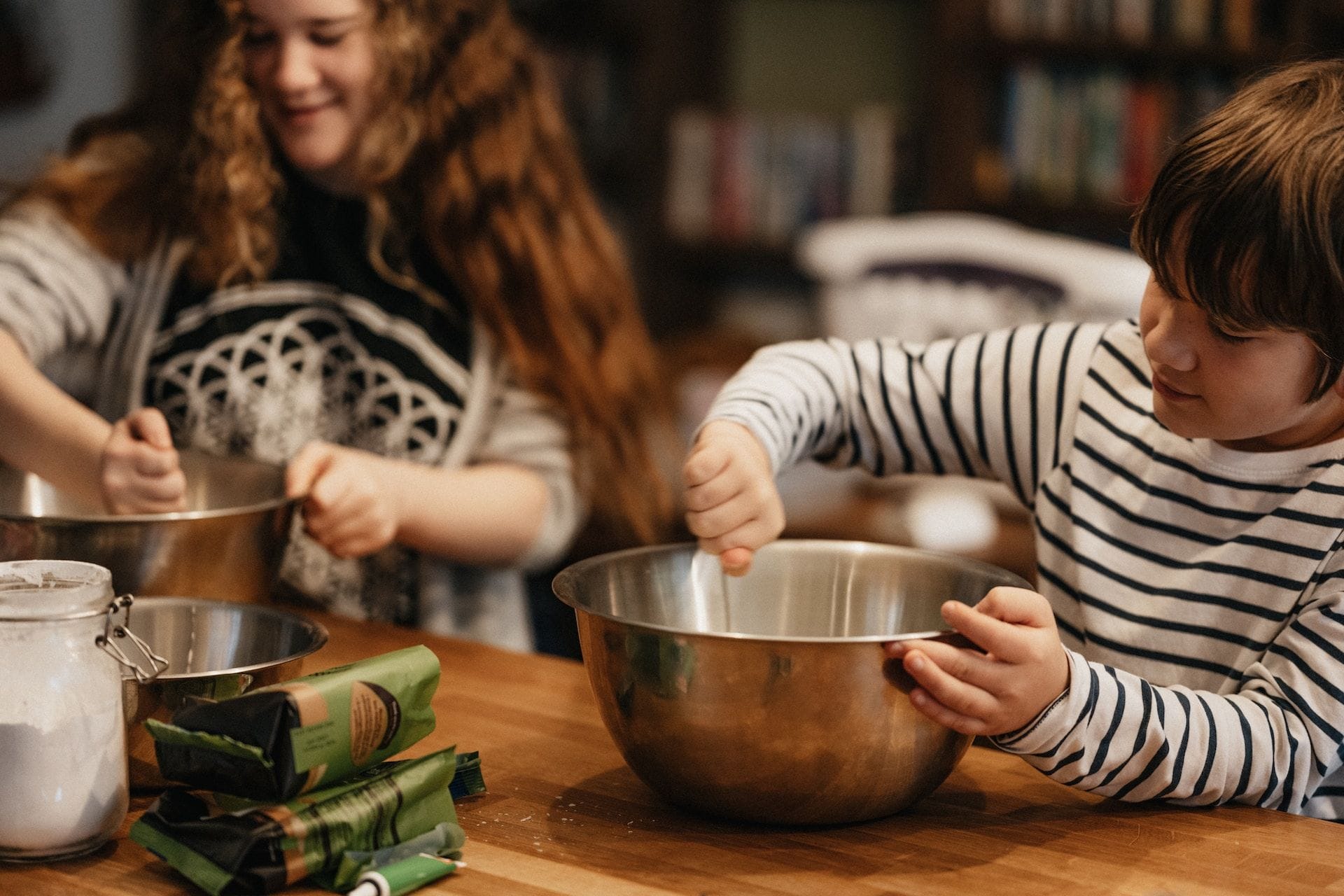
Despite the recent media focus on children’s rights, children’s duties have not been abolished at all. On the contrary: in Germany, where I live, the Civil Code actually obliges children to help their parents in the household.
As long as the child lives in the parental household and is raised or supported by the parents, the child is obliged to help the parents in the household and the family business in a way that matches the child’s abilities and situation in life. (Section 1619 of the German Civil Code, paraphrased)
German courts consider three and a half to seven hours of help per week reasonable for kids under 12, unpaid. Speaking of work: according to happiness research, work is all the more satisfying when you know why you’re making the effort and see meaning in it; when you’re allowed to take a break now and then; when you’re interested in what you’re doing; when you make progress and enjoy it; when you get to work with people you like; when you pursue a goal that matters to you, and celebrate when you’re done!
That means: if kids can muster little to no interest in what they learn at school, it’s all the more worthwhile to help them find a hobby or a place to volunteer. (Priscilla Alvarez)
7. Serve others as a family
And that brings us to volunteering. You can help someone move together, help out at a camp, work at a soup kitchen, visit a nursing home. Because bringing joy to others helps kids look beyond their own little world, feel part of something bigger, and generally increases their sense of self-efficacy. On top of that, you grow together as a family and create shared experiences and memories. The biblical saying “It is more blessed to give than to receive” doesn’t only imply some abstract, future blessedness in the hereafter.
Research on altruism attests that volunteers get a good portion of blessedness right here and now, because the people who benefit most from volunteering are usually the volunteers themselves.
Not only because meaningful work is satisfying for the one giving too, but because organizing your own volunteer work means connecting with many people, building your relational resources, and learning far more than you ever could in a pure consumer role.

8. Hold a family meeting
How do you do that? The campfire version: you sit down together in a circle and talk it out. The manager version: you hold a meeting and brainstorm your way to shared solutions. Something like that. It was in fact a management trainer, Thomas Gordon, who made the family meeting popular with parents.
Basically, a family meeting includes these elements: all family members are present, there is time for constructive discussion of topics that affect the whole family, solutions and compromises are found, and binding agreements are made. You can spice up the whole thing with prayer together, refocusing on God, and giving thanks to and encouraging each other.

In a family meeting you can:
- share highs and lows in family life and personal life
- offer praise and criticism about how things are going at home
- set new rules
- discuss the values that matter to us
- express wishes
- change rules
One extremely important rule should be observed:
In a family meeting, every family member gets time to speak. Everyone may express themselves, and nobody should be interrupted, laughed at, scolded or discredited in any other way.
Also, a family meeting shouldn’t degenerate into a chat session but should be moderated with a goal in mind. Parents can moderate at first, but at later meetings the (school-age) kids can take over.
The topics can be anything: help around the house, planning shared activities, purchases, keeping the house in order, or problems in living together.
Experts recommend holding the meeting regularly, because only then do you create recurring, reliable opportunities to speak up about family life and address problems BEFORE they escalate. Want to know how you can even reach constructive solutions with self-centered, argumentative, work-shy kids? Then go back to hack number 1 and work on your relationship and your regular conversations with your preteen, or learn from the Harvard Negotiation Project’s classic Getting to Yes, whose method can basically be used anywhere different points of view exist.
9. Get out into nature
One thing you practically can’t get wrong as a parent is going outside with your kids. A very unrepresentative survey among my friends found that all the adults who were dragged into nature by their parents as children love nature today and admire God’s creation. And in turn drag their own kids into nature. So what does the dragging do? Well, a lot.
Working out or doing activities in nature together promotes your kids’ physical and mental well-being and creates shared experiences. Looking at green surroundings has been shown to help with the sensory overload a child’s brain has to endure every day in our media-saturated society.

Doctors recommend two to three hours a day outdoors and moving for a child to develop optimally. In Taiwan, because of the rampant spread of nearsightedness among children, school schedules were completely restructured a few years ago to send kids outside for at least two hours a day. By the way, romping around in nature promotes the much-praised free play of children and thus helps them develop their creativity. Two birds with one stone.
10. A bedtime ritual, as long as it lasts: read aloud, journal, pray
The day hasn’t come yet when your child goes to bed after you do. Seize the moment and spend a little more time with them. Here are the three top elements that help your child go to sleep in peace: reading aloud, journaling, praying.
Reading aloud is recommended not only for small children but also for kids who can already read. Apparently it helps with something important in brain development, and almost certainly with strengthening the sense of WE as a family. Besides, that way you’ve checked off the most important item, spending time together, by the evening at the latest. We recommend a mix of the Bible, Christian novels and general children’s literature.
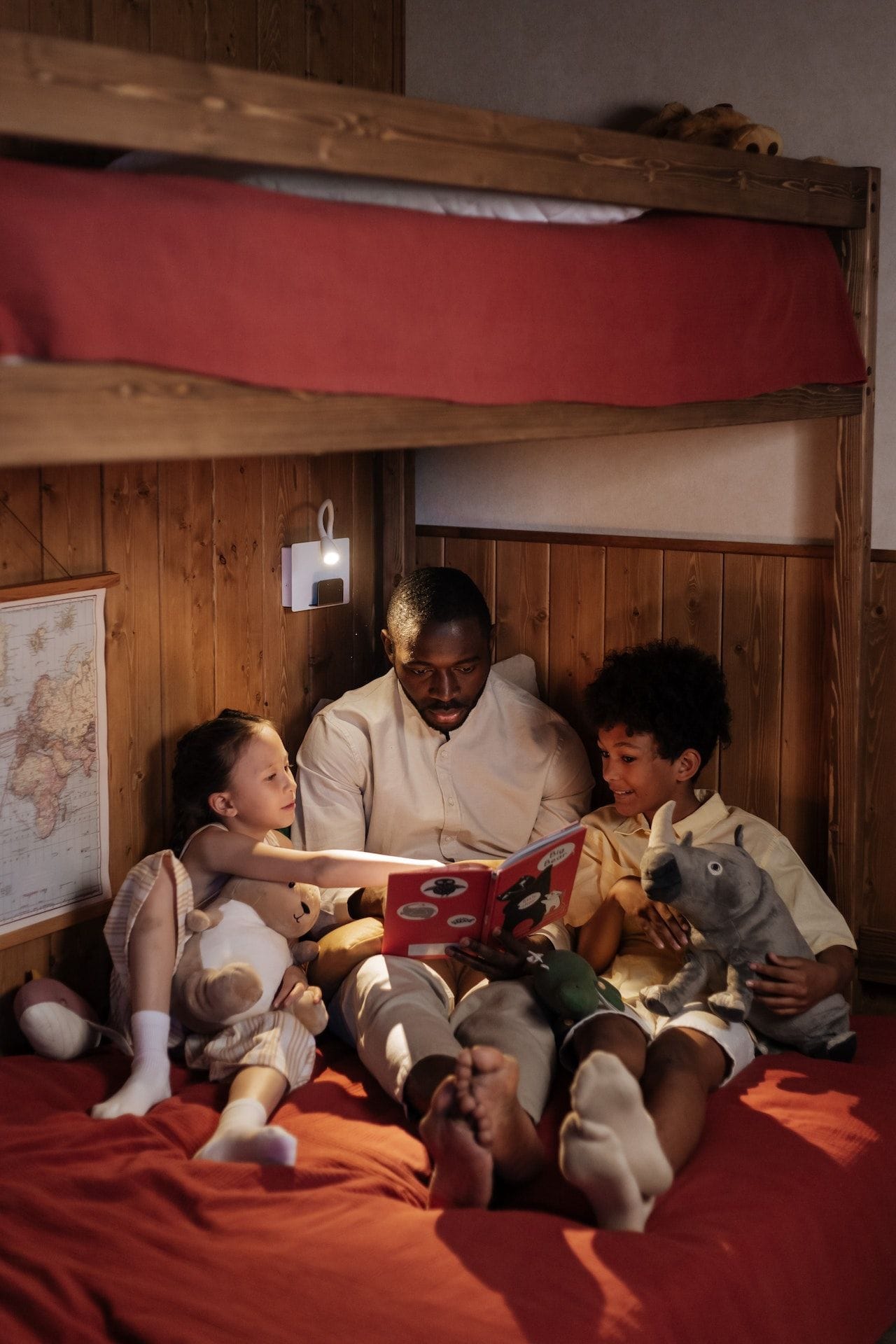
The journaling tip has to do with reflection. There are different ways to reflect on the day and think about what you actually experienced and how it felt. It’s the preparation for prayer and doesn’t necessarily have to be written. But it helps to write down a few points of gratitude now and then, and as a parent you can do that for your child.
That way, in the darker hours of your child’s life, you can pull out what you wrote and remind them of the good things that have happened in their life. (Priscilla Alvarez)
Finally, prayer is an invaluable tool for settling your child down. These days, meditation is recommended by many health researchers and educators, and most techniques are about becoming aware of yourself and then letting go. That is exactly what happens in prayer, plus much more. There’s a reason for that intriguing verse in the Psalms: “for he grants sleep to those he loves,” which some translators read as God providing for his loved ones while they sleep. On top of that, you can bless your child specifically once more, place them under God’s protection, and remind yourself that you have a mighty ally in the project “Help, what do I do with my preteen?!”

Of course there are many more hacks you can’t go wrong with. Waking them up kindly in the morning, for example. Apologizing and forgiving. Building on your child’s strengths. Helping them find good friends, setting up playdates when your child is too passive even though they would enjoy meeting up. Speaking your kids’ love language. What hacks do you have?
Further reading
- Steve Biddulph, The Secret of Happy Children
- Danny Silk, Loving Our Kids on Purpose
- Mark Batterson, Praying Circles Around Your Children
English version: September 2026