“Zoogleyball” isn’t just any group game, it’s THE group game for big groups, especially for kids and teens. It’s perfect for getting everyone moving in the gym or on the sports field and for building team spirit. But Zoogleyball is more than just sports. It gets people thinking: What role does each person play on the team? How can we get past obstacles together? After the game, you can use our devotional ideas to reflect on the experience with your kids and teens and connect it to everyday life at school or to an upcoming event, like the start of the school year. With well-aimed questions, you can build a bridge from the fun of the game to the challenges and joys of school life.
Preparation
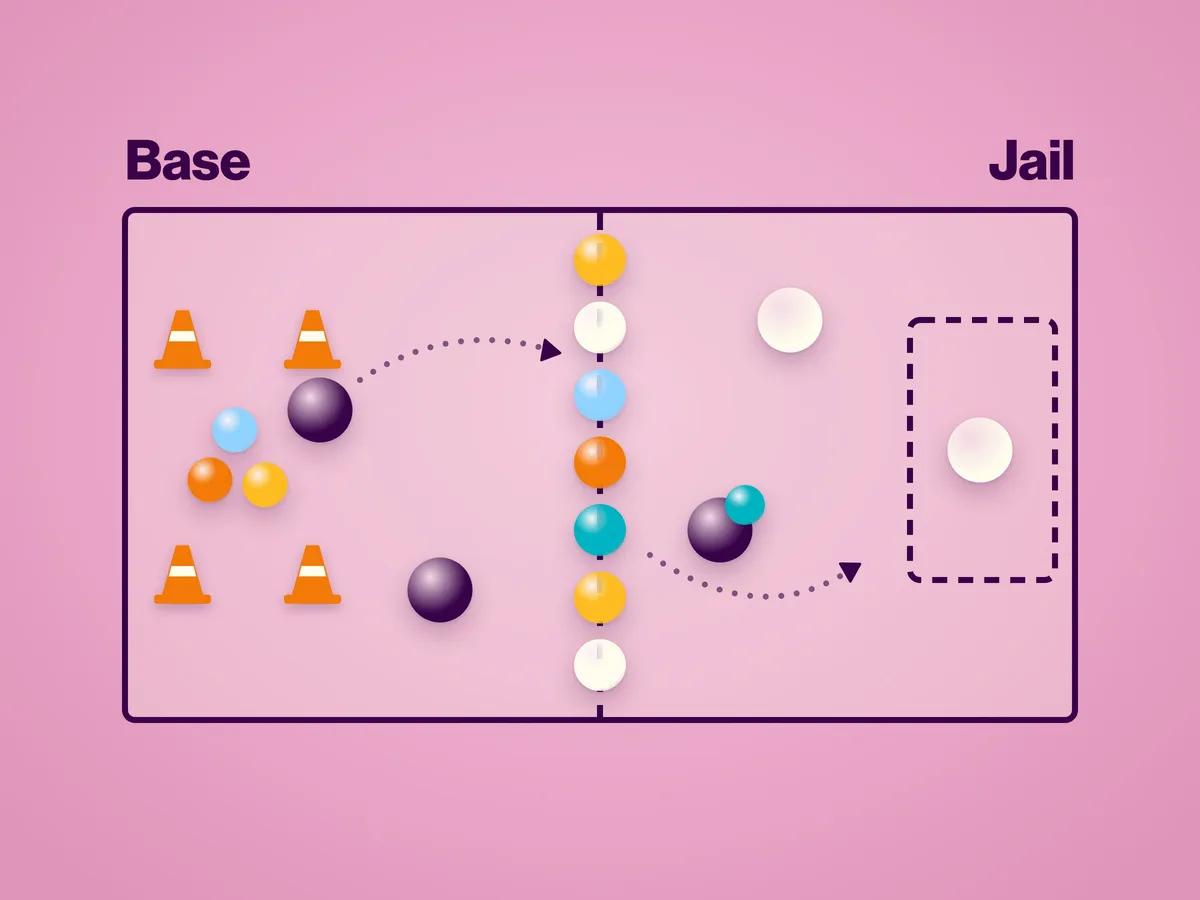
- Split the group into two teams (use pinnies or colored bands to tell the teams apart).
- Place all the balls in a line across the middle of the playing area.
- Choose a “base” and a “jail” for each team at opposite ends of the playing area.
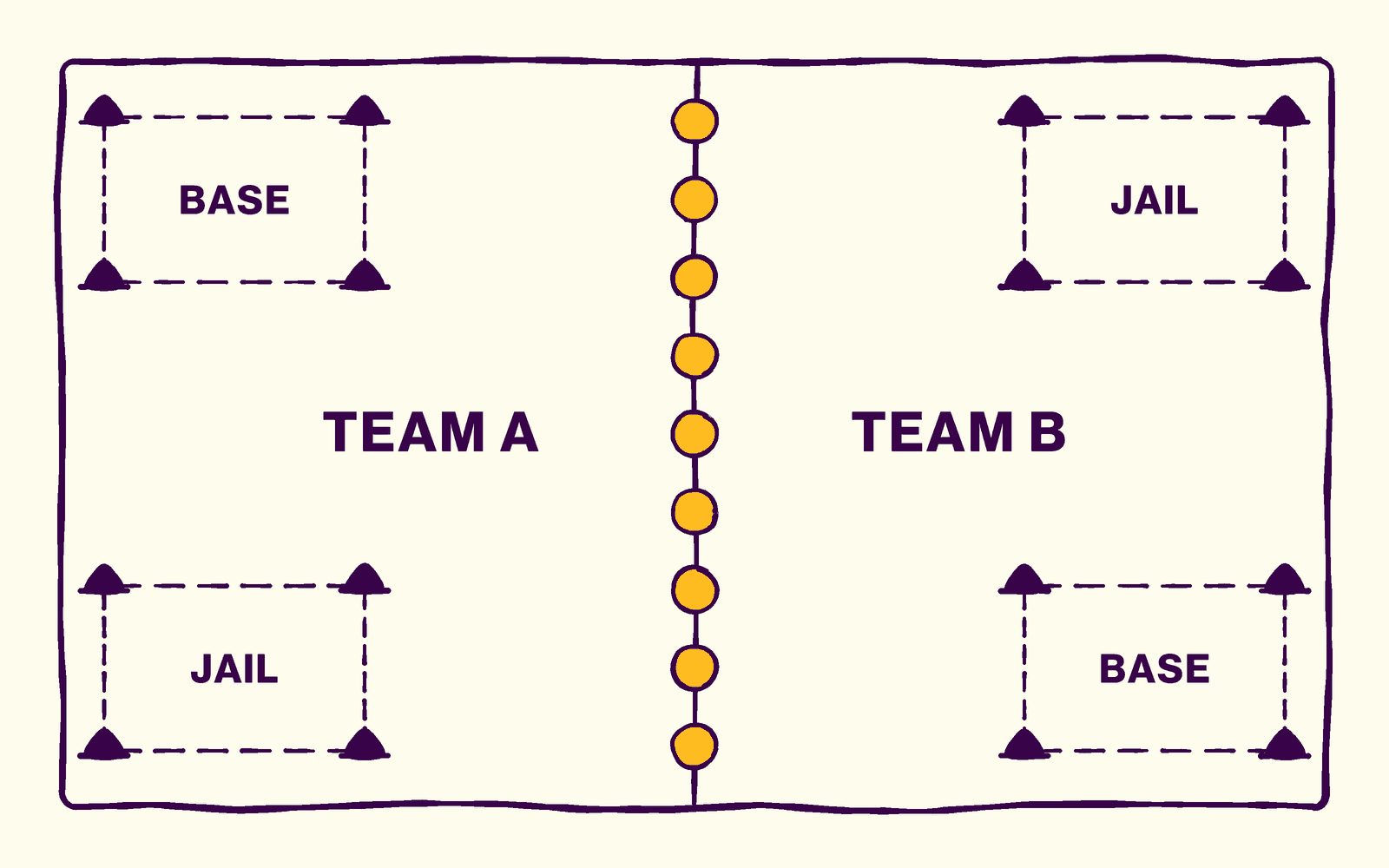
How to play
- The teams start behind their own base.
- On a signal, all players may run to the middle and try to bring a ball back to their own base.
- The ball may not be thrown or rolled.
- Each player may carry only one ball at a time.
- Once all the balls have been taken, players try to steal balls from the other team’s base and bring them back to their own base.
- While players are on the other team’s side, they can be caught. If they get tagged or touched, they have to go to the other team’s “jail.”
- To free a teammate who has been caught, a player from the same team runs to the jail and tags the prisoner.
- Then both players have to go straight back to their own side. On the way back, they’re safe from being tagged and show it by holding their arms up.
- The player doing the rescuing may not be holding a ball (in other words, they can’t come from the other team’s base with a stolen ball and go into the jail).
- Players can’t be caught on their own side or in the other team’s jail.
Variations
- Players can’t be caught in the other team’s base, but they can be as soon as they leave it.
- Once players have entered the other team’s base and have a stolen ball in their hand, they may go back to their own side without being caught.
- Players who reach the other team’s jail may free all their teammates who have been caught (instead of just one).
End of the game
- The game ends when one team has all the balls in its base. That team wins.
- Or the game ends when the time you set runs out. Then the team with the most balls in its base wins.
Reflection questions
Use the reflection questions or one of the devotional ideas below to connect what your group experienced with faith and to draw important lessons for school and for life.
❓What could a ball like this be in your everyday life at school?
❓What “balls” are you trying to “catch” at school? (They could stand for goals, ambitions, challenges or responsibilities.)
❓What “balls” could get “stolen” from you at school?
❓How did you feel on your team during the game? (supported, encouraged, challenged, left on your own, etc.)
❓Who do you trust at school or at home the way you trusted your team during the game? What makes these people an important part of your “team”?
❓What could be your base in everyday life at school?
❓What are your “bases” in life? Places or times where you feel safe and strengthened? How can you make them stronger or create more of them?
❓In what situations at school or in life have you ever felt “trapped,” like in the game?
❓How did you get out of that “jail”? Who might have helped you get out?
❓How can we help free others from that “jail” or support them so they don’t end up there in the first place?
3 devotional ideas
#1 Friendship and support (David and Jonathan)

Bible passage: 1 Samuel 18-20
Theme: Friendship and support
Summary: David and Jonathan become close friends, even though Jonathan’s father, King Saul, wants to kill David. Jonathan helps David escape his father’s attempts on his life more than once.
Application: True friendship shows itself in hard times. It’s important to build real friendships in our lives and to be there for others, just as others are there for us.
#2 Teamwork and faith (The walls of Jericho)

Bible passage: Joshua 6
Theme: Teamwork and faith
Summary: The Israelites march around the walls of Jericho, and the walls fall at God’s command.
Application: God’s plans may sometimes seem strange or impossible to us, but when we trust and obey, we can experience incredible things.
#3 Perseverance (Nehemiah rebuilds the wall)

Bible passage: Nehemiah 2-6
Theme: Strategy, planning and perseverance
Summary: Despite opposition and ridicule, Nehemiah rebuilds the wall with God’s help and the support of the people.
Application: With a clear goal and God’s guidance, we can overcome opposition and reach our goals.