There I sat. In the emergency room.
Next to me, a girl in severe pain.
Her mom on the phone, almost the entire time, because I had to clear every single step with her. I was so grateful she could be reached. Because the registration form was hardly any help. No health information, no clear agreement on what we were allowed to do in a situation like this.
I had just come along to help out. But suddenly I was the one responsible. And I realized: we weren’t well prepared. Not because anyone was careless. But because some things only become clear when it gets serious.
After that, one thing was clear to me: I never want to go through that again.
Since then, I’ve learned a lot myself and have been able to help volunteers be better prepared and ready to act.
But that’s easier said than done. Because by now the whole planning process is a balancing act: between legal requirements and common sense; between safeguarding policy and piles of paperwork; between being careful and simply wanting to be out there with teenagers.
That’s why you’re getting this guide: so that you don’t find out in the hospital what was missing from the camp registration, and so that you don’t lose your vision for the camp under all the rules and regulations. So that you and your team are prepared and, above all, so that children and teenagers have a time they’ll never forget, because they feel seen, experience incredibly good community and hopefully meet Jesus, in a safe space.
What helps you along the way
When you lead a camp, you’re not just the entertainment, even if it sometimes feels that way. You share responsibility for the spiritual direction, the organization and the legal framework. And to keep everything from getting mixed up along the way, you need clarity, preparation and structure.
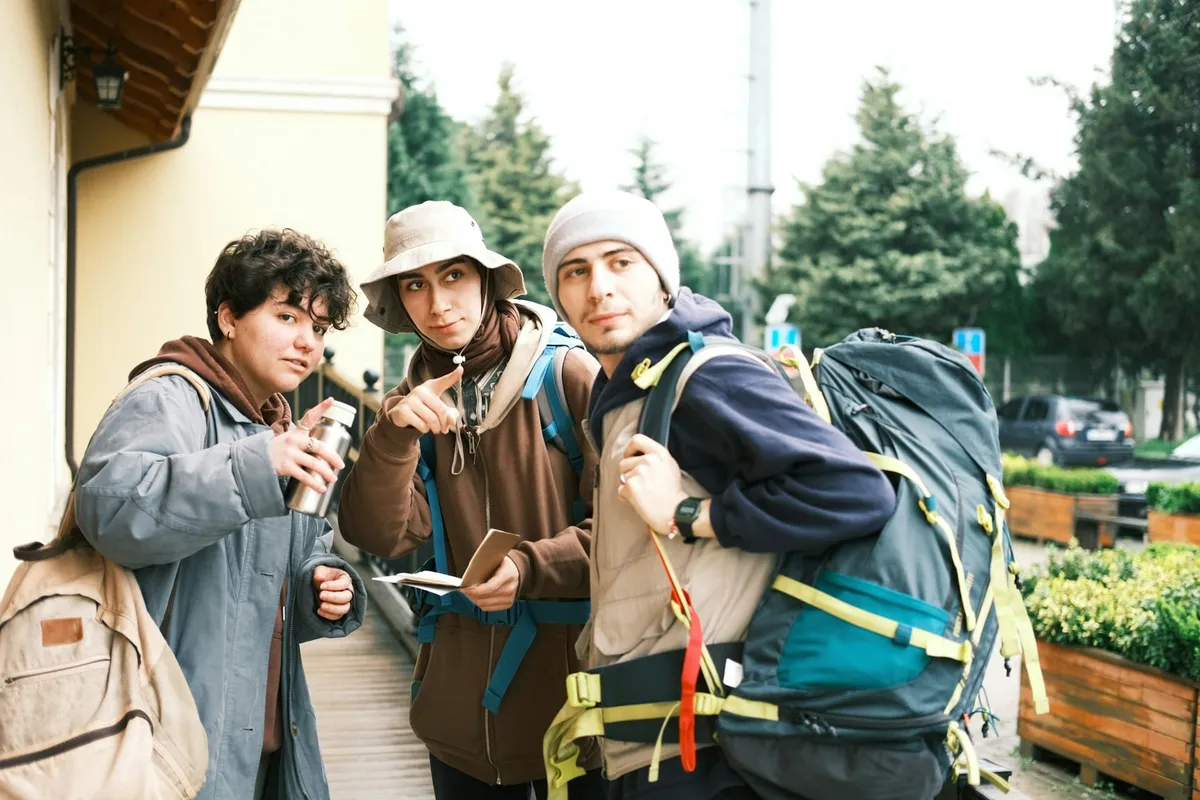
This picture can make it more tangible: a camp is like a mountain hike. You set out with a group and take responsibility for everyone arriving safely. You don’t know every stage in advance, but you prepare well.
What do you need for it?
- Your spiritual compass: That’s your spiritual posture, your relationship with Jesus, your awareness that Jesus goes ahead of you and prepares your tasks for you. He is your leader! Phew. Thank goodness he is, and that you get to follow him.
- Your safety line on the climb: The safety line stands for responsibility. It concerns you as the leader, but also your team, the organization running the camp, the parents or guardians and yes, even the participants themselves. Responsibility protects you and others, connects you as a group and helps you hold on or get help at the right moment.
- The right gear: That’s your concrete planning, from the camp information and putting your team together to safeguarding and emergency planning, all the way to hygiene, data protection, insurance and program.
Your spiritual compass
Camps are more than program and community; they are spiritual spaces.
What you believe, how you pray, how you live affects the camp. Your attitude shapes the atmosphere.
If you aren’t anchored spiritually, sooner or later you’ll be tossed back and forth in the planning. Because camps challenge you: physically, emotionally and spiritually. What really carries you then isn’t your experience, your to-do list or even your team, but your relationship with Jesus.
It is the foundation.
Your compass doesn’t show you every step, but it shows you the direction. Not everything can be planned. But you can be prepared. In your heart. In prayer. In your attitude. And you don’t carry this preparation just for yourself. You’re also responsible for how your team is doing spiritually. Whether you’re focused on Jesus together. Whether there’s room for spiritual alertness, encouragement, fighting together in prayer.
Because spiritually speaking, a camp isn’t neutral ground.
It’s a push into enemy territory. It’s a spiritual maneuver.
And I’ll be completely honest with you: the enemy doesn’t like that one bit.
That’s why:
- Pray together as a team, not just at camp but beforehand.
- Ask Jesus what he has in mind for this time.
- Expect attacks to come, but also expect Jesus to be stronger.
- Put not only the participants into his hands, but yourselves too.
Your spiritual compass isn’t the icing on the cake of a perfectly planned camp. It’s what keeps you on course when the fog rolls in, when the path gets steep, when you lose your way.
Your safety line on the climb: clarify responsibility
Before you and your team brainstorm the camp theme or plan the canoe trip, you need a solid safety system, like on a fixed-rope climbing route. Who climbs with whom? Is everyone clipped in? And what happens if someone slips?
In practical terms, that means: clarify from the start who is responsible, and for what.
Who is running the camp?
It sounds dry, but it’s crucial:
- Is the camp organized by a nonprofit, a youth organization, your church or privately?
- Who stands behind the event legally and organizationally?
You’ll find more details under “Insurance and liability.”
Does travel law apply?
In some countries, a camp counts legally as a package trip as soon as you offer at least two services (for example lodging plus meals or program) for one total price. Check the laws and requirements where you live.
If it does, that can mean:
- You have to provide certain information (for example terms and conditions, prices, payment).
- You need financial protection in case your organization becomes insolvent (there may be exceptions for occasional nonprofit trips).
- You’re bound to deliver what your camp information promises.
More on this under point 7, “Insurance and liability.”
Who is liable if something happens?
Often it’s not you personally who is liable but the organization running the camp, as long as you don’t act with gross negligence. The details depend on the laws where you live.
But:
- If you put an unsuitable or overwhelmed person in charge, the organization can be held responsible for choosing them.
- If supervision duties are neglected (for example, letting participants swim in the lake in the dark while all the staff are sitting around the campfire), you may be held liable directly.
Just like on the climb, the same goes for camp: a safety line saves lives.
A strong safety system means:
- Clear responsibilities and roles
- Reliable agreements within the team
- Safeguarding measures everyone has made their own
- Good training and communication
Responsibility doesn’t mean you have to carry everything alone. It means you make sure it gets carried.
• In the US, the American Camp Association has an overview of state laws and regulations for camps, with a page for each state.
Your packing list at a glance
You can be focused spiritually and still stumble if you’re not well equipped along the way. Because even with the best compass, you need sturdy shoes, water, a sense of direction, a map, an emergency kit. And that’s exactly what matters in camp planning too. Your gear is everything that keeps you organized and ready to act.
A good packing list for your planning:
- Camp information and registration (your map) 🗺️: It shows who can come, which route you’ll take and under what conditions. Clear communication prevents misunderstandings with parents or guardians, participants and the organization running the camp.
- Your team (your hiking buddies) 🥾: Who’s walking with you? Who carries which part of the gear, in other words, who takes on which tasks? How do you prepare your team spiritually, practically and legally?
- Safeguarding and prevention (helmet and protective gear) 🪖: What can happen along the way? Where are the risks? What have you planned so that everyone stays safe? What about closeness and boundaries?
- Emergency management (your first aid kit) 🆘: Who informs whom in an emergency? Where do you meet if chaos breaks out? What’s the procedure for injuries, missing persons or danger? The plan gives you confidence, even though you hopefully never need it.
- Hygiene and infection control (your water filter) 💧: What do you need to watch out for in kitchen hygiene? How do you respond if illness breaks out? Prevention protects the group and takes pressure off your team.
- Supervision and data protection (your radio and combination lock) 🔐: What are you allowed to collect, store and share, and what’s off-limits? How do you protect sensitive information? And how do you carry out your duty of supervision responsibly and on solid legal ground?
- Insurance and liability (your emergency blanket) 🛡️: Usually tucked away unnoticed in your backpack, but vital when things get dicey. Clarify in advance what is covered (church, organization, additional insurance?) so you’re not left on your own when it counts.
- Program (your stretch of the trail) ⛰️: How will participants experience the camp? What should they take home spiritually, emotionally and relationally? How do you create space for encounters with God, with themselves, with others?
So much for the packing list, but what exactly is behind it? Because a good mountain hike doesn’t depend on having everything in your backpack, but on knowing when you need what. Some things you need right away. Others only halfway up. And some hopefully not at all, but they’ll save you, your team and the participants when it matters.
Your gear in detail
So now we’ll take a closer look at each piece of gear, as practical help that makes you better able to act. Because responsibility doesn’t start at camp. It starts with your preparation.
1. Camp information and registration (your map) 🗺️
Your camp information is like the invitation to your camp (your hike), but it also has to be clear, legally correct and complete. And the registration form is the contract with the parents or guardians and the participants.
What belongs in the camp information?
- Where are you going? When? And who is this camp for?
- What can participants expect (roughly, for example sports, nature, creative activities, faith, action)?
- Cost (including payment method, cancellation policy, financial assistance)
- Information on travel, lodging, meals and the leadership team
- A note on insurance (what is covered by the organization or church?)
What belongs in the registration form?
- Complete details of participants and parents or guardians
- Medical information (allergies, medications, emergency contacts, etc.)
- Permissions, for example for photos and videos, swimming, outings
- A privacy notice in line with the data protection laws where you live
- Information on binding registration, deadlines and how to get in touch
• In the US, the American Camp Association offers sample health forms for campers and staff (free for members, for a fee for nonmembers).
2. Your team (your hiking buddies) 🥾
It’s not a good idea to go hiking alone. Your team is crucial for the camp to succeed, in its content as well as spiritually and organizationally. Your team carries the camp with you. Depending on age and group size, you need enough people, and the right people.
What do you need to watch out for?
- How many staff do you need for this group? Check which staff-to-participant ratios are required or recommended where you live.
- Assess realistically whether there are special challenges: participants with disabilities? Size of the grounds? Special activities (climbing, swimming, etc.)?
- Find out which background checks are required where you live for staff and volunteers, and get them done in good time.
- You need at least one person with current first aid training (in the US, for example, through the Red Cross). Basic crisis skills are part of the preparation too.
How do you prepare your team?
- Clarify tasks in advance: Who is “on duty” when? Who does night watch? Who cooks, who hosts, who is the contact person in a crisis?
- Spend time together as a team before camp, for example on a team weekend. That’s where trust, spiritual focus and clarity grow.
3. Safeguarding and prevention (helmet and protective gear) 🪖
What matters when the path gets narrow, the terrain is hard to read and you’re out with a group that trusts you?
Children and teenagers have a right to be protected, especially in spaces where they experience closeness, open up and grow spiritually. Your safeguarding policy isn’t just a document. It’s your safety framework, which builds trust and gives you direction as a team.
What does it include?
- Closeness and boundaries: Clear rules on physical contact, private spaces, sleeping arrangements and looking after someone who is sick or injured. What’s okay? What isn’t? How do we treat each other with respect?
- Participation: Where and how can participants have a say and help shape things, for example rules, free time, mealtimes?
- Ways to raise concerns: Who can children and teenagers turn to when something isn’t right? Are there easy ways for them to speak up and be heard? Is there a trusted person or an outside contact?
- Media and phone use: How do you handle phones, internet, photos, music? Which times are deliberately phone-free? Are there places where no photos or videos may be taken (for example sleeping areas)? How do you protect privacy, especially for younger participants?
- Prevention training: All staff should know what crossing a boundary looks like, how to respond and where to get help.
- Procedures when abuse is suspected: What do you do if you suspect abuse, including sexual abuse? Who do you contact? Who decides on the next steps?
• In the US: MinistrySafe offers abuse prevention training, screening, background checks and policies for churches, camps and youth ministries.
• In the UK: thirtyone:eight, an independent Christian charity, offers safeguarding advice, resources, DBS checks and a helpline.
4. Emergency management (your first aid kit) 🆘
Accidents, illnesses or crises are like sudden changes in the weather on the mountain. They’re unpredictable and sometimes dangerous, but manageable if you know what to do.
What does it include?
- First aid person: Who has current first aid training and can be reached at all times?
- Medication: Who hands out medication, and do you have all the written permissions?
- First aid kit: Who makes sure it’s complete, stays complete and is always with you?
- Individual emergency plans: Are there clear procedures for participants with asthma, allergies or chronic illnesses? Are there clear procedures for evacuations or danger from outside?
- Location check: Do you know the way to the nearest doctor or hospital? Is a car available? One thing you can always do in an emergency or after an accident: call emergency services.
- Chain of communication: Who calls the parents or guardians if something happens? What do you tell them and when, and who informs the leadership or the organization if needed?
• In the US, the American Camp Association collects safety resources for camps, including a camp crisis hotline and partners for emergency and disaster planning.
5. Hygiene and infection control (your water filter) 💧
On a long hike, clean water is vital, and so is good hygiene at camp. Cleanliness isn’t an extra; it’s active health protection. Especially with large groups, tight spaces, tents or when you cook for yourselves, prevention is crucial.
What does it include?
- Clarify responsibilities: Who takes care of kitchen hygiene, trash and cleaning the bathrooms?
- Illness: How do you respond to fever, diarrhea, colds, lice, stomach bugs? Are there clear procedures?
- Handwashing and serving food: Are there fixed rules? Do they still work with 30 hungry participants in the rain?
- Bring everyone on board: Do participants and staff know how hygiene works and why it matters?
- Training and instruction: Does someone need food safety training under the rules where you live (for example, if you cook for yourselves)?
• The World Health Organization’s Five Keys to Safer Food manual sums up the basics of food hygiene: keep clean, separate raw and cooked food, cook thoroughly, keep food at safe temperatures, use safe water and raw materials.
6. Supervision and data protection (your radio and combination lock) 🔐
You can’t be everywhere at once, but you are responsible. That’s why you need clear responsibilities and agreements within the team, and a watchfulness that is present without being intrusive.
What does it include?
- Who is “on duty” when? Who takes night watch, watches the swimmers, goes along on outings?
- What do you do if a participant withdraws or seems disoriented?
- For younger participants, are there clear meeting points and rules about going off on their own?
- How do you deal with participants crossing boundaries with each other?
- How do you handle personal data, and who has access to it, especially health information? How do you make sure the people responsible can access important information during camp while it’s still stored securely?
7. Insurance and liability (your emergency blanket) 🛡️
Insurance is like the emergency blanket in your backpack that keeps someone alive when things get dicey.
What does it include?
- Organizer’s liability insurance: in case your planning, equipment or supervision causes damage or injury.
- Group accident insurance (optional): covers injuries to participants or team members.
- Trip cancellation and travel health insurance: especially worthwhile for trips abroad or higher fees.
- Insolvency protection: required in some countries, depending on who runs the camp and how often (see “Does travel law apply?” above).
8. Program (your stretch of the trail) ⛰️
Your program is more than a string of activities, workshops or talks. It’s the path you walk together, stage by stage. It’s what participants experience, what they remember, and what gives Jesus room to work. A good program isn’t loud or spectacular.
What do you need for it?
- A common thread: What should happen spiritually? What is the heart of this camp? What does God have on his heart for these participants, these staff, this time?
- Rhythm and balance: Picture a mountain you climb together. How do you prepare the group for the ascent? What breaks do you need along the way? How do you celebrate at the summit, and how do you manage a good descent, with a party around the campfire down in the valley? How do you strike a good balance between depth and fun, action and quiet, structure and freedom?
- What you pack: What supports the message you’re living out together? Where can devotionals, creative elements, games and activities help make the theme something participants can experience?
- Share responsibility: Who carries the spiritual side with you? Who shapes the program? Who prays with you? How could you involve your church, your youth organization, or parents and friends who pray for you regularly?
Your program doesn’t have to be perfect. But it should reflect what you believe and what you’re praying for. And sometimes what makes the difference is exactly what wasn’t on the schedule.
Reflect regularly with your team:
- What should participants take home at the end, spiritually, emotionally, relationally?
- Which conversations do we want to make possible?
- Which encounters do we want to encourage?
English version: October 2026