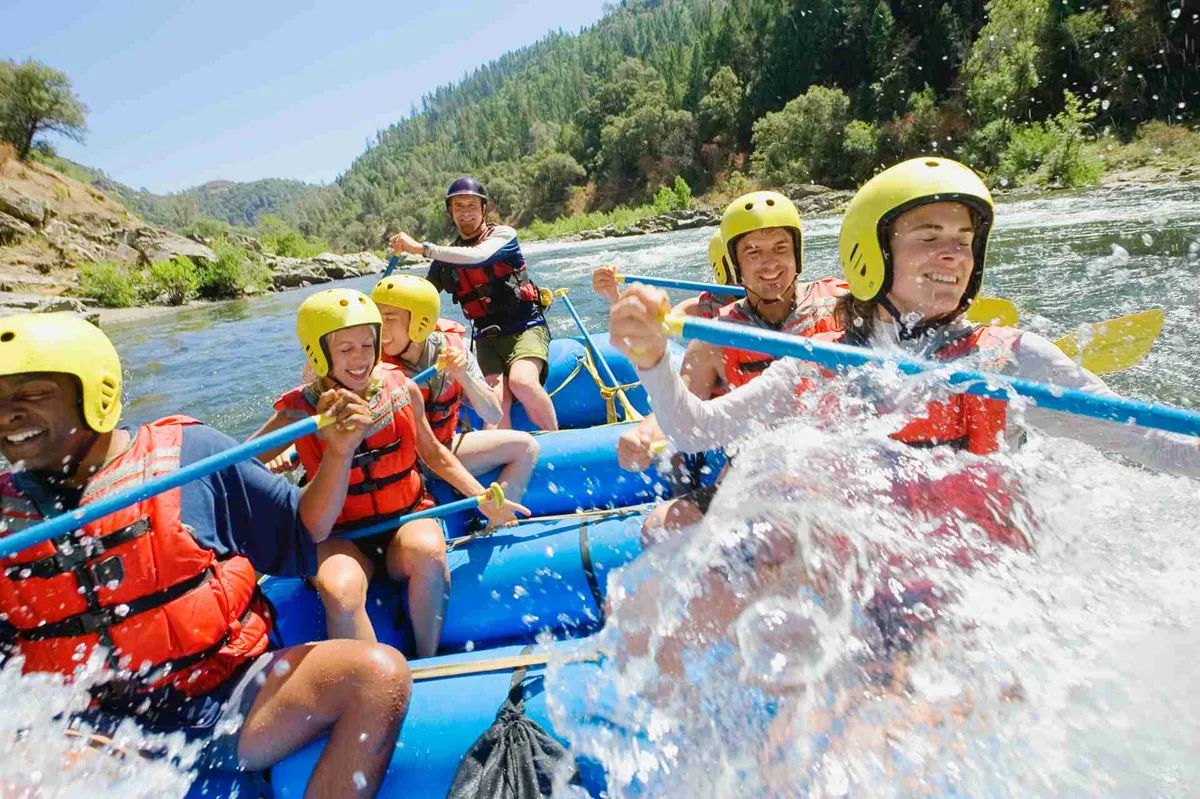
Picture this: You go on a canoe trip together. The river, sometimes gentle, sometimes raging, demands a lot from you. Farther downstream you unpack your food and grill it over the fire. Maybe it’s even part of an expedition lasting several days. At some point you change clothes, pack up your gear and the canoes, and head home.
As leaders, you debrief:
- What went well?
- What went less well?
- What would we do differently next time?
… But by this point, the participants are no longer there.

I keep hearing from young people that they had a great time at a camp and sometimes even reached their limits. When I then ask whether the leaders reflected on those experiences with them, the answer is often “No.”
As an experiential educator, I think: What a shame, really, because that way many of the experiences they have go down the drain, as the saying goes.
Between two extremes
There are two extremes, and neither fits the idea of experiential education:
#1 Entertainment
We get children and teens involved in all kinds of activities: crafts, sports, games, cooking … we have fun together, we take on challenges. At the end we shake hands or have some other ritual and go home. There’s no reflection as a group. That’s how I often experienced it during my time in children’s ministry.
#2 Therapy
The other extreme is where no action comes before the reflection. You try to reflect on topics that have no practical basis. Some may not have experienced what you want to talk about at all, or they experienced it very differently from what we’re getting at. To some extent, you can compare it to a therapy session. What you want to talk about, or maybe are only supposed to talk about, may lie far in the past. The focus is on reflection that comes out of an immediate action.
Experiential education, or learning from experience, relies on both parts: action and reflection. It combines activities with an educational component.
Debriefing together matters
At this point, I want to make the case for debriefing an activity together with the group. Often activities do get debriefed, but only within the leadership team. Some people think reflection is unnecessary. Maybe there’s also a fear that the kids and teens won’t like it. Personally, I’ve had good experiences with it, and I’ll try to take away some of that fear.
First, though, a word about the benefits of reflection:
#1 What happens becomes experience
The action is front and center, but reflection turns the activities into an experience. The experiences come back into awareness and can be looked at together. Out of the reflection, participants take their experiences home with them, and they can also set goals: How will I try to handle a certain situation the next time I run into it?
#2 The group holds up a mirror to me as a leader
Often I had no idea where I actually stood as a leader. What do the teens really like? What did they maybe find less great? How can I improve and change as a leader? When we debrief as a team, it’s all about our own impressions. The participants’ feedback is missing. We may also be biased because we thought something was a good idea, and we don’t even notice that our participants see it differently. Leaders have blind spots too, so we need feedback as well.
4 creative reflection methods
So how do you run a reflection that doesn’t get boring? For one thing, a lot depends on how you prepare it as a leader. Just like the activities themselves, a reflection needs some preparation time. And yes: Reflection can be creative. Try new methods every now and then. It doesn’t always take words. Think about how you evaluate things in your everyday life or at work.
1. Maybe you like working with a scale from 1 to 10:
- What’s true for you?
- What’s less true?
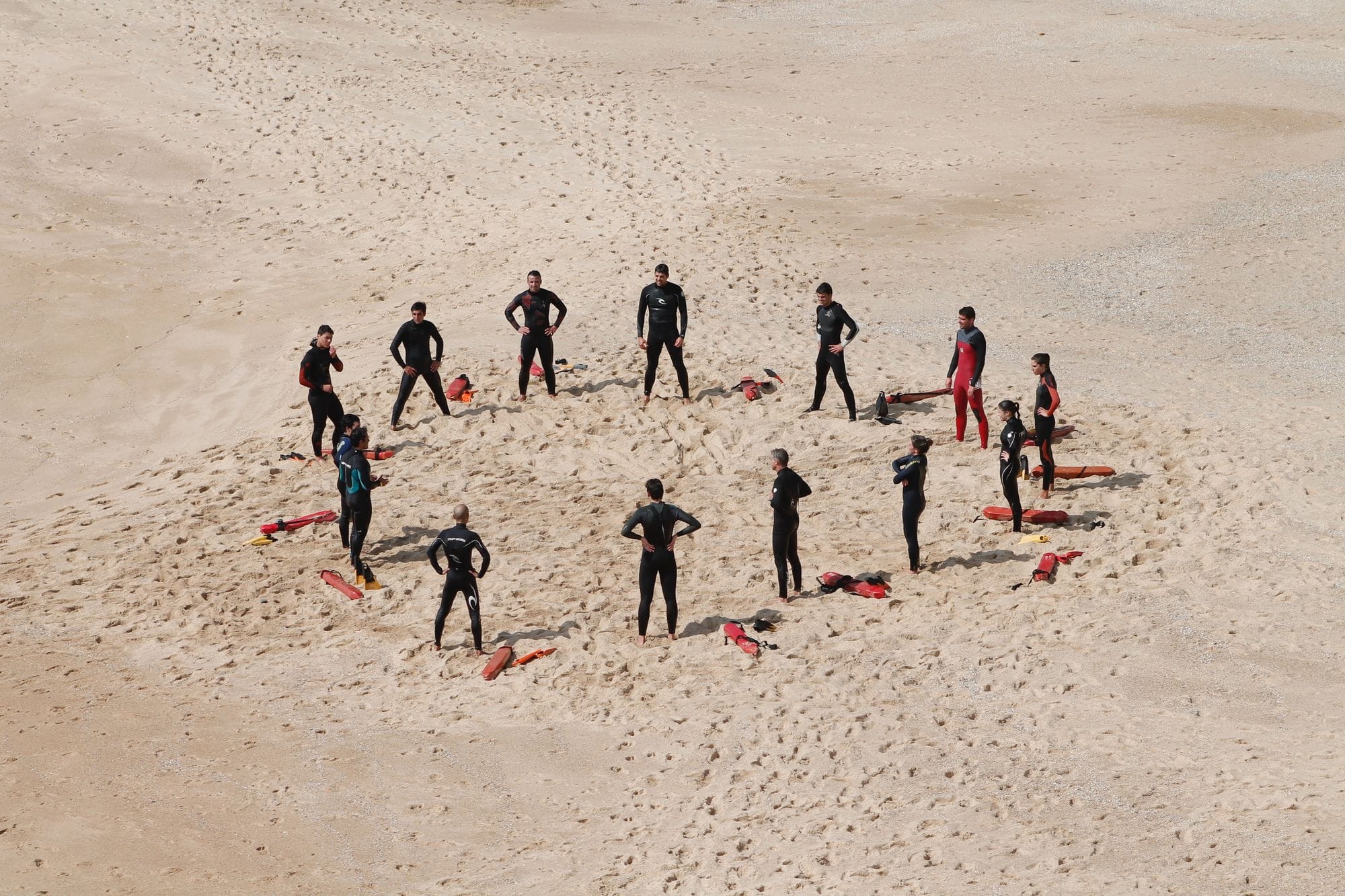
You mark out an area. The participants stand in the middle. Now you ask a specific question.
✅ If the answer is yes, the participants move in one direction.
❌ If it’s no, they move the other way, of course.
Or maybe you want an overview of a whole camp.
3. How about a weather map?
- Every day, you write down the activities you did.
- Depending on their age, participants can draw weather symbols on it themselves or stick on symbols you’ve prepared: sun (for great moments), clouds, rain, snow and so on.
That gives you a picture of how the group, and also individual participants, experienced the camp.
4. Another simple method is to pass around a trash can and a backpack:
Each participant can briefly say what they’re taking with them from today (backpack) and what they’re throwing away (trash can). Anyone who doesn’t want to say anything can just pass the trash can or backpack along.
This reflection method works especially well for a short reflection, for example after an afternoon, when you don’t want to lose too much time.