To prepare, form two teams of roughly equal strength. Then each team gets a territory, and you can easily vary its size. Each team gets a flag or something flag-like (if you don’t have a flag, you can take a stick and tie a cloth to it).
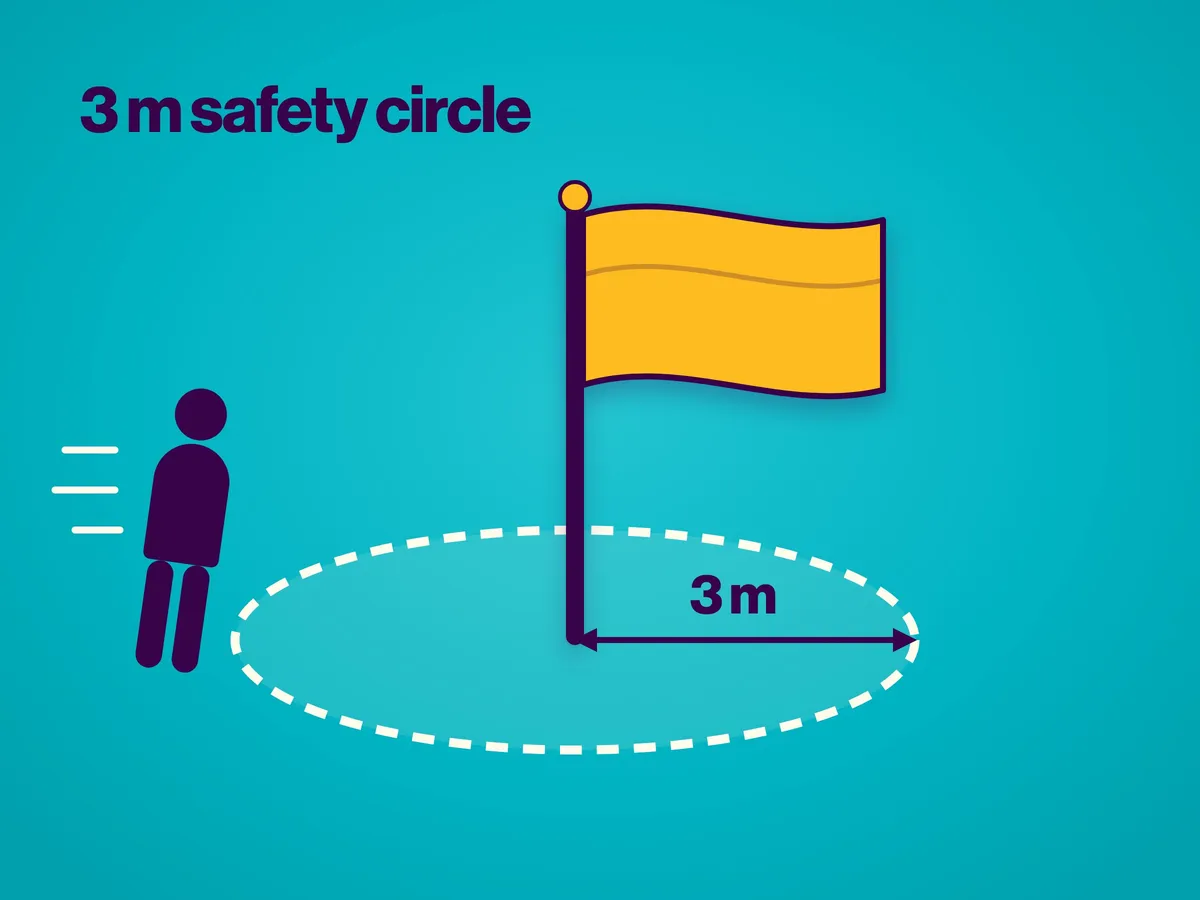
The teams go to their territories and together find a place for their flag. Depending on the materials, they lay the flag on the ground, tie it to a tree or stick it into the ground, and mark a circle with a radius of 3 meters (10 feet) around the flag.
The circle can also be laid out with a rope, sticks or similar objects, but most of the time it’s enough to draw a line with your shoe.
When both teams are ready, the game begins. In the game, there are “runners” and “guards” or “catchers.”
The runners’ job is to get into the other team’s territory, scout out the flag and, ideally, take it and bring it back to their own territory. If they pull that off, they have won the game.
But the runners have to watch out: if they get tagged by a guard or catcher from the other team, they have to go back to their own territory and wait there for 10 to 30 seconds before they can play on.
The guards’ or catchers’ job is to defend their own flag. They try to tag all the runners and so drive them out of their own territory to protect the flag.
It’s important that the guards or catchers make sure they don’t “camp” at the flag, meaning they don’t stand too close to it, because that’s against the rules.
The game is won when a team manages to bring the other team’s flag into its own territory.
Other rules:
- The flag has to be placed so that it’s visible from three directions.
- Anyone inside the 3-meter (10-foot) safety circle can’t be tagged and is safe from the other team.
- The flag may not be thrown, but it may be handed off.
- If it falls to the ground while being stolen, it has to stay there, and the safety circle no longer counts.