
Your child used to tell you everything, and now you get “fine” and a closed door. Axis, a Christian ministry that helps parents understand teen culture, wrote a short free guide on staying close anyway.
A Parent’s Guide to Getting Teens Talking
Why teens go quiet, when to worry, and how to start talking again.

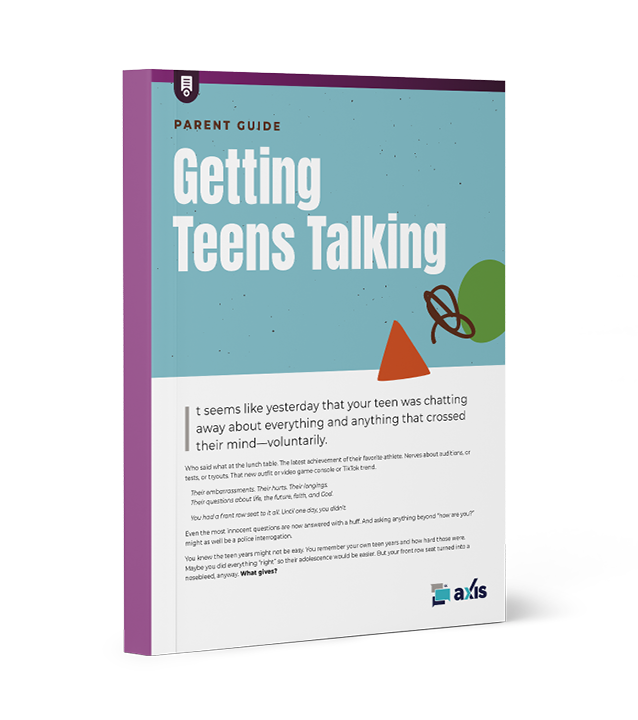
What you’ll find in the guide:
- why the quiet years between 9 and 18 are a stage, not a verdict on you
- three signs of more than normal growing up
- a rule of three for timing, tone and topic
- seven questions to open up, plus a prayer for tired parents
“You had a front row seat to it all. Until one day, you didn’t.” Axis, A Parent’s Guide to Getting Teens Talking
Using it as a youth leader or educator
Teens who go quiet at home often still talk to another trusted adult. That can be you.
- Use the in-between moments. Setup, cleanup, the bus ride to camp: many teens talk more when nobody is watching them answer.
- Ask about things, then about them. Start with a show, a game or a song they like. Personal questions come easier once the conversation is already moving.
- Be the bridge, not the secret. When a teen tells you something heavy, help them take it home. Offer to be there when they tell their parents, unless what they share points to harm at home or a risk to their safety; then follow your organization’s safeguarding policy and reporting duties.
- Hand it on. Share the guide with the parents in your group, for example at a parent meeting, with one honest sentence about how normal the quiet years are.
More on Pulse
- Staying Close to Your Teen Through Puberty
- Pastoral Conversations with Teenagers: 7 Practical Tips
- 36 Questions That Turn Small Talk into a Real Conversation
“A Parent’s Guide to Getting Teens Talking” is by Axis, © Axis. The introduction and the ideas for youth leaders and educators are by Pulse.