3 leadership styles compared: kitchen moments and iced tea moments
In one module of my experiential education training, we looked at the different leadership styles. As I reflected on it, my kitchen moments, or iced tea moments, came to mind. Let me explain what that’s all about:
#1 What is an iced tea moment?
Normally, iced tea is something refreshing. A great thing on hot summer days. Brewed, cooled and garnished with a slice of lemon, plus ice cubes. Perfect.
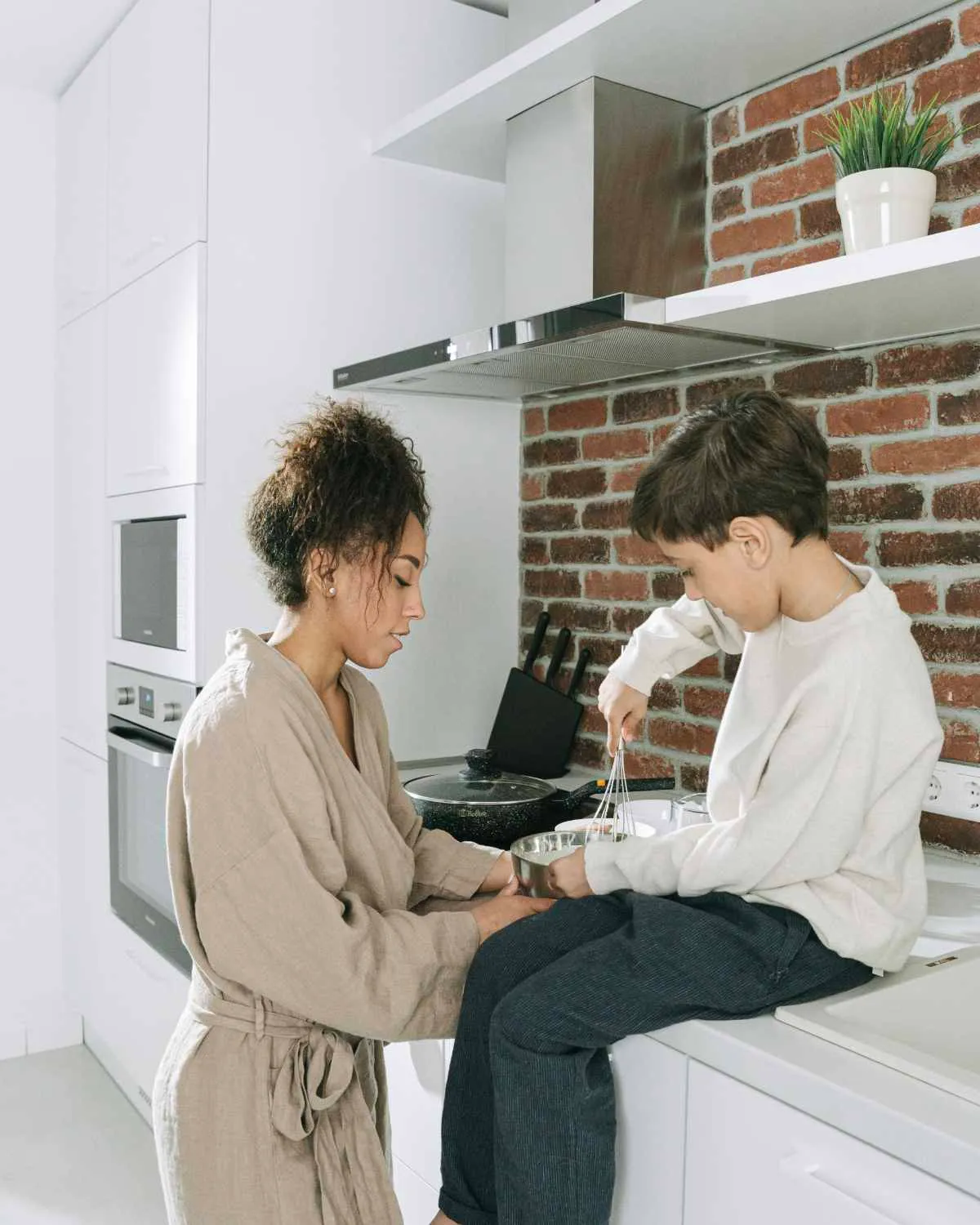
But unfortunately, that’s not the kind of moment I mean. My iced tea moments were courtesy of my teacher in cooking class at school. While we were cooking, she said to me:
“René, why don’t you make the iced tea?”
I should say that I was a rather quiet and slow student, and by asking me to make the iced tea, my teacher kept me busy for a while and could take care of the other students. This routine repeated itself time after time. So it didn’t stop at that one time. There were dozens of these iced tea moments in my cooking class career.
#2 What is a kitchen moment?
Now imagine a completely different situation. The teacher comes into the kitchen and says:
Today the kitchen and everything in it belong to you. Cook whatever you feel like. At 12 noon, we’ll eat together.
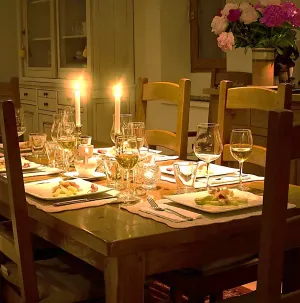
That would be the ultimate kitchen moment. Only a framework is defined: the kitchen. A task is given: cook whatever you feel like. And a goal is set: at 12 noon, we’ll eat together.
Now you may be wondering: isn’t that a bit extreme? Yes, of course, and an approach like this certainly isn’t suitable for every age group. Between an iced tea moment and the extreme form of the kitchen moment, there are a few intermediate stages. Still, I would have loved to have kitchen moments like that.
Leadership styles and what they should achieve …
From my iced tea moments, together with my training in education, I was able to learn a lot about leadership styles. How you lead can have a big influence on children and teenagers. I don’t want to blame my teacher. She probably put herself under far too much pressure. She wanted to be finished on time, and the food had to be cooked and served the way she wanted it. And as a slow student, I inevitably stood in the way of that goal. Today I can see it that way. But for years, it was stamped on my mind that I couldn’t cook. Her leadership style meant that I couldn’t find any joy in cooking. I wanted to learn from what I had experienced and do things differently in my work with teenagers.
But what leadership styles are there, and what are their pros and cons? Today we talk about three different leadership styles:
- Authoritarian, or hierarchical, leadership style
- Democratic, or cooperative, leadership style
- Laissez-faire
The authoritarian or hierarchical leadership style
This was the leadership style my cooking class teacher used. She set the rules. She decided what we would eat and didn’t involve anyone in the decisions. She gave the instructions, and we carried them out. I made the iced tea the way she said. Exactly according to the recipe.
Pros:
- Clear structures
- Tasks and areas of responsibility are clearly defined
Cons:
- The relationship between the leader and everyone else involved tends to be distant
- Little or no room for the participants to act on their own
- It can lead to resentment among the participants
The democratic or cooperative leadership style
The democratic or cooperative leadership style is about leaders making decisions together with everyone else involved. The goals are also defined together. In this leadership style, control by others is largely replaced by self-control.
Pros:
- Motivation and satisfaction rise when participants are involved in decisions
- This leadership style encourages independent thinking and acting
- Challenging and supporting each person individually is easier in the democratic leadership style
Cons:
- Making decisions can be slow and complicated
- Because part of the leadership is handed over and therefore neglected, the leader’s authority and credibility can decrease or be lost
- If votes happen too early, those who also have good ideas but don’t dare to voice them can be overlooked
Laissez-faire
The French expression laissez-faire roughly means “let them do it.” As the leader, you withdraw completely from what’s happening, or at least don’t actively step in. That’s why, strictly speaking, you can’t call it a leadership style in the classic sense. The goal: complete self-organization by the participants.
Pros:
- Individual strengths can be lived out
- Everyone can develop freely
- High motivation at the start
Cons:
- Motivation decreases over time
- Successes and failures aren’t addressed; more precisely, they’re neither rewarded nor sanctioned
- In activities, there’s a risk that dominant personality types win out, while reserved people, who may even come up with better ideas, get drowned out
“It’s the right mix of leadership styles that does the trick!”
How different leadership styles can turn into a kitchen moment and a refreshing iced tea moment
In training sessions, it’s about finding a good mix of the leadership styles. The three leadership styles have a lot to do with closeness, distance or even the absence of the leader.
In my experiential education training, in the module on leadership styles, we had to position ourselves in a triangle toward one of the three leadership styles. The question was: “Which leadership style appeals to you most?” Personally, I felt most comfortable with the democratic leadership style. It’s often people with a strong need for harmony who commit to this style. In the democratic style, you meet the others as equals.
But I was surprised when two of the trainers, a man and a woman, told me that they would never use this leadership style in a training session. They would only move between the authoritarian leadership style and laissez-faire.
The reasoning made sense to me: While a leader who acts only in an authoritarian way builds up a lot of distance from the participants, in the democratic leadership style you’re very close to the group, maybe even too close.
In the democratic style, a leader can still be seen very much as the expert who actively steps in and actively supports the group. This can create dependencies that keep the participants from working out their own solutions. Because you see yourself as part of the group and make decisions not on your own but together with the group, the boundaries between you as the leader and the participants can blur and no longer be clear.
In a pure laissez-faire leadership style, however, you would withdraw from what’s happening completely and leave the participants to themselves.
So what could a good mix look like in a training session?
You set the framework: the authoritarian part
Let’s say you’re planning a cooperative game in which the participants need different skills to reach a certain goal.
While you announce the task and the rules, you’re the one in charge. You take on the authoritarian leadership style. You define the framework, the boundaries and certain rules that have to be followed.
You give freedom and step out of the process: the laissez-faire part
At first, this part took some effort for me. Simply letting go and not actively taking part in the actual process. But that doesn’t mean you have no task during this time. During these times, I became an observer.
Sure, it’s great to be part of the group yourself and to join in actively. But I’ve found that the educational benefit is much greater when you simply let them get on with it and observe. These observations can then feed into the reflection and the transfer.
As an observer, you always need a certain distance from the group to notice as much as possible. This part isn’t possible if you’re too involved in the process and therefore only ever see part of what’s happening. In this part, try to collect as many impressions as possible and write them down if needed.
The following questions can help you:
You debrief together with the group: your role as facilitator
In the past, we mostly evaluated our programs and activities within the team. Debriefing together with everyone involved still gets too little attention in children’s and youth ministry. And yet it has to be said that only through reflection can activities turn into experience. In this sense, you could also call experiential education “learning from experience.” Without reflection and transfer into personal life, activities have little educational benefit. Reflection is there to create that benefit.
In this process, you take on the role of facilitator. There are many different creative reflection methods. So reflection doesn’t have to be a boring, dry exercise where you work through a list point by point. Some parts can even happen without words, by people positioning themselves: standing in a circle and stepping closer to the center when a statement is especially true for them, or farther from the center when it isn’t true at all. That way you quickly see how the group experienced things, and you can ask follow-up questions: Why are you standing closer to the center? Why are you standing farther away?
Remember: Experiences in a group process can differ, and everyone can perceive a situation completely differently. That’s why it’s important to make the reflection as broad as possible, to take as many of these moments into account as possible and let them become experience.
Important: Bring in the observations you’ve remembered or written down. But make sure the participants get to state their own views. Don’t hand them solutions for how you think they should tackle a particular problem. Ask how they want to handle it in the future. If rules were broken, ask whether the rules weren’t clear or what the reason for breaking them was. Also share your feelings about how you experienced such a situation.
Summary
The kitchen belongs to the participants. They need to be able to develop in it. Say goodbye to the idea that everything has to go the way you imagine it. The learning effect is at least as great when mistakes are made in an activity and a goal isn’t reached. Provided you debrief such a situation intentionally with the participants.
Iced tea that isn’t based on a particular recipe can even taste better and more refreshing in the end. It doesn’t even have to be the recipe. The recipe doesn’t have to be bad either. Sometimes the difference is simply that you created something yourself, that you’re seen as a person and can contribute something. That lets a lot of potential unfold.
That’s why:
- As a leader, it’s important to create a framework with certain ground rules but also freedom. Not everything has to be regulated down to the smallest detail. In this part, you’re the one who sets the tone.
- During the group phase (the work process), you try to stay out of it as much as possible. That reduces dependencies. The participants can develop and get creative themselves.
- You reflect on what happened together with your group, not just in your team. That way you make it possible for events to turn into experience. The activities gain educational value.