
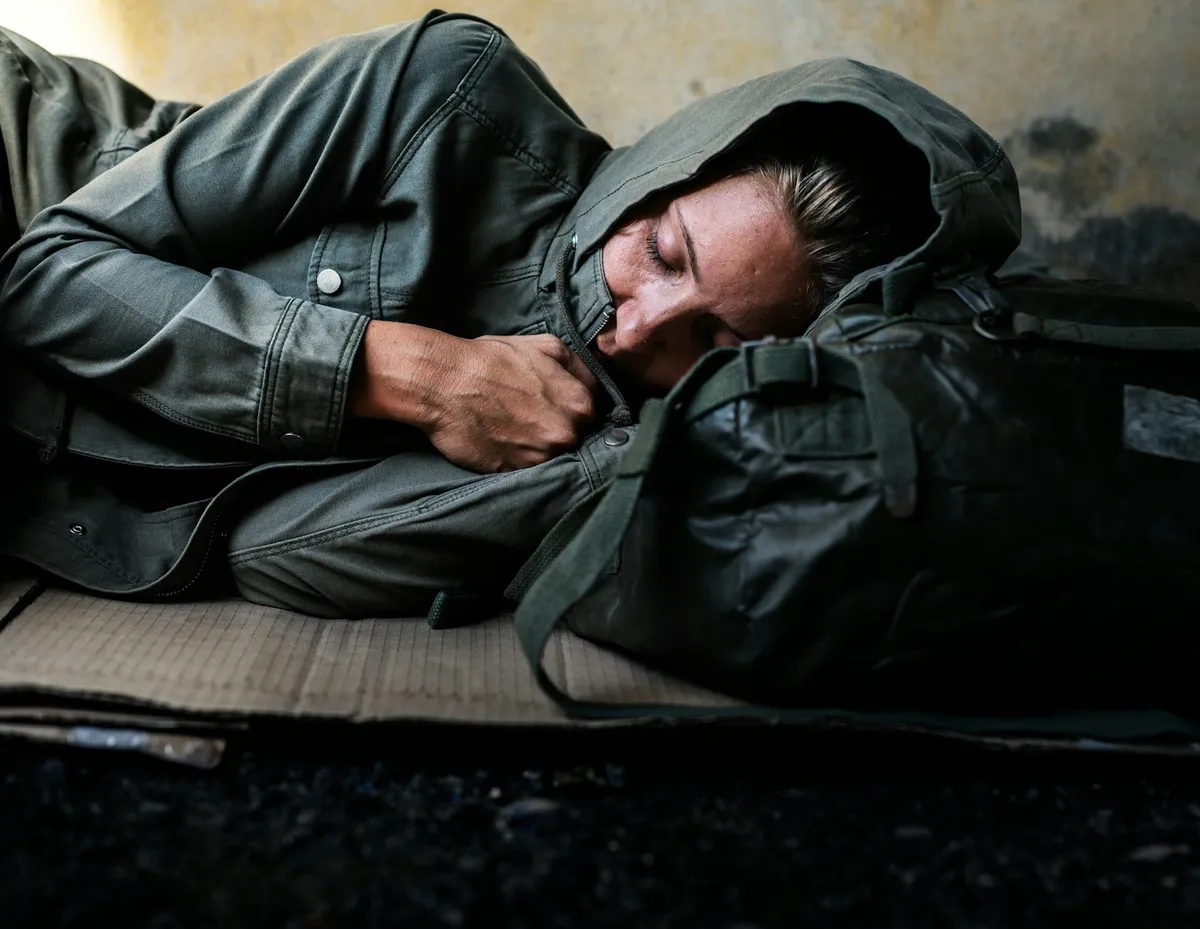
Today is the International Day for the Eradication of Poverty
1. Protecting the environment to fight poverty: yes, you read that right.
Our climate is changing: where it used to rain for three months straight, it now rains for one. Droughts that only a few years ago were short enough to get through now wipe out people’s livelihoods. Over the past few decades, the number of natural disasters has risen significantly. Climate challenges that our part of the world can largely absorb are an existential catastrophe for countries in poverty. Droughts, floods and extreme weather make life even harder for groups that are already disadvantaged. When we actively stand up for protecting our environment, whether through the way we treat the environment ourselves, reforestation projects, renewable energy or protecting ecosystems, we can help keep things from getting even worse for people in poverty.
2. You have a voice and a vote: use them!
Political decisions have a direct impact on measures against poverty. When we take part in elections and give our vote to politicians and ballot proposals that stand up for social justice and fighting poverty, we can bring about change. Political involvement at the local and national level is crucial for supporting programs that help people in need.
3. Financial support for people in need
Here’s a no-brainer: one direct way to help people in poverty is financial support. That can mean donating to charities or to people you know who are in need. Every contribution, no matter how small, can make a big difference in someone’s life. If you don’t have the money yourself, you can organize a bake sale, a charity run or a benefit concert.
4. Fair play, even when you shop.
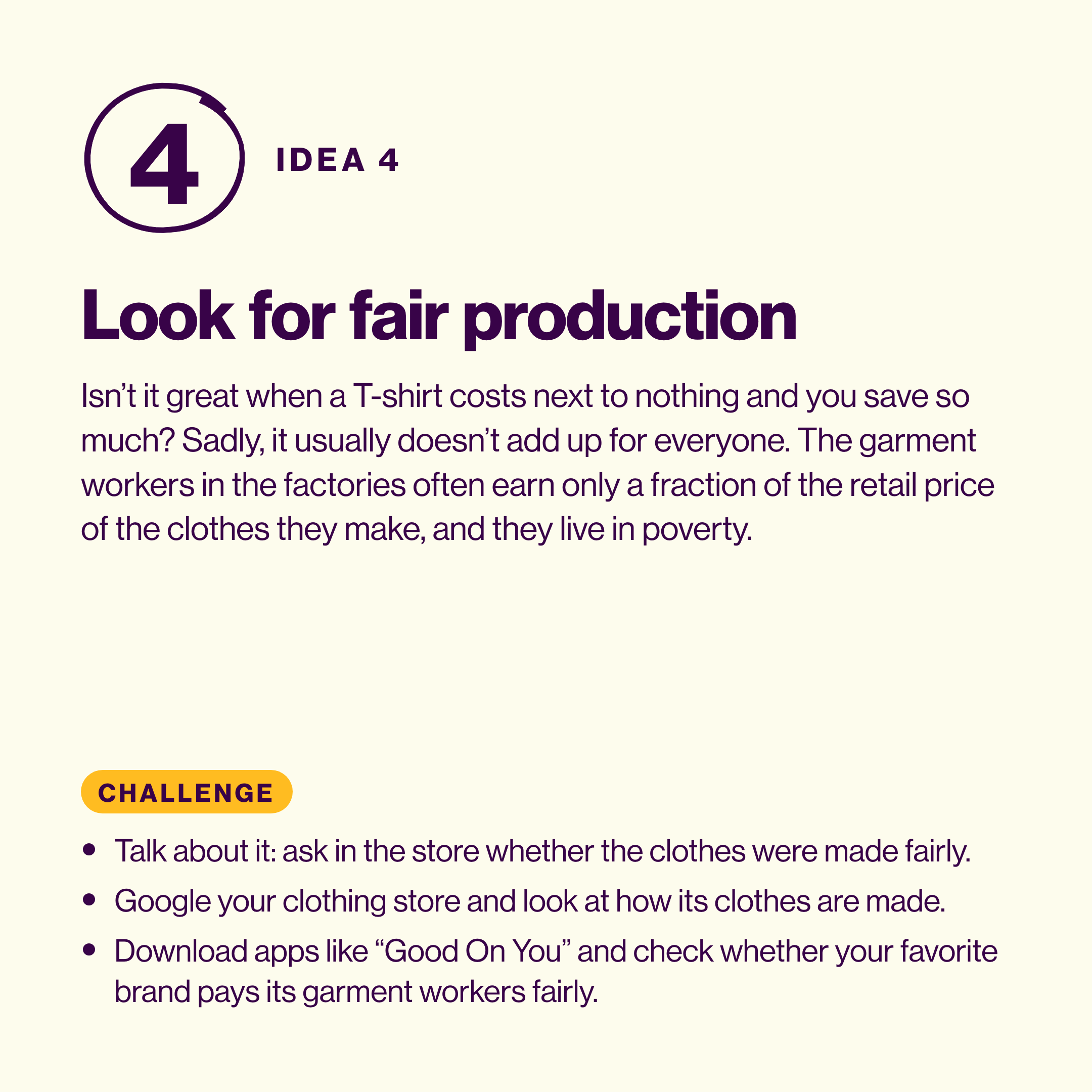
By paying attention to fair production conditions, we can make sure workers earn a fair income for their work. Buying fair trade products not only supports sustainable practices but also helps fight poverty in the countries where the products are made. To find out whether a product was made fairly, apps like “Good On You”, asking in the store or a quick Google search can help. Companies that produce fairly usually say so very prominently.
5. Are you still consuming, or already overconsuming?
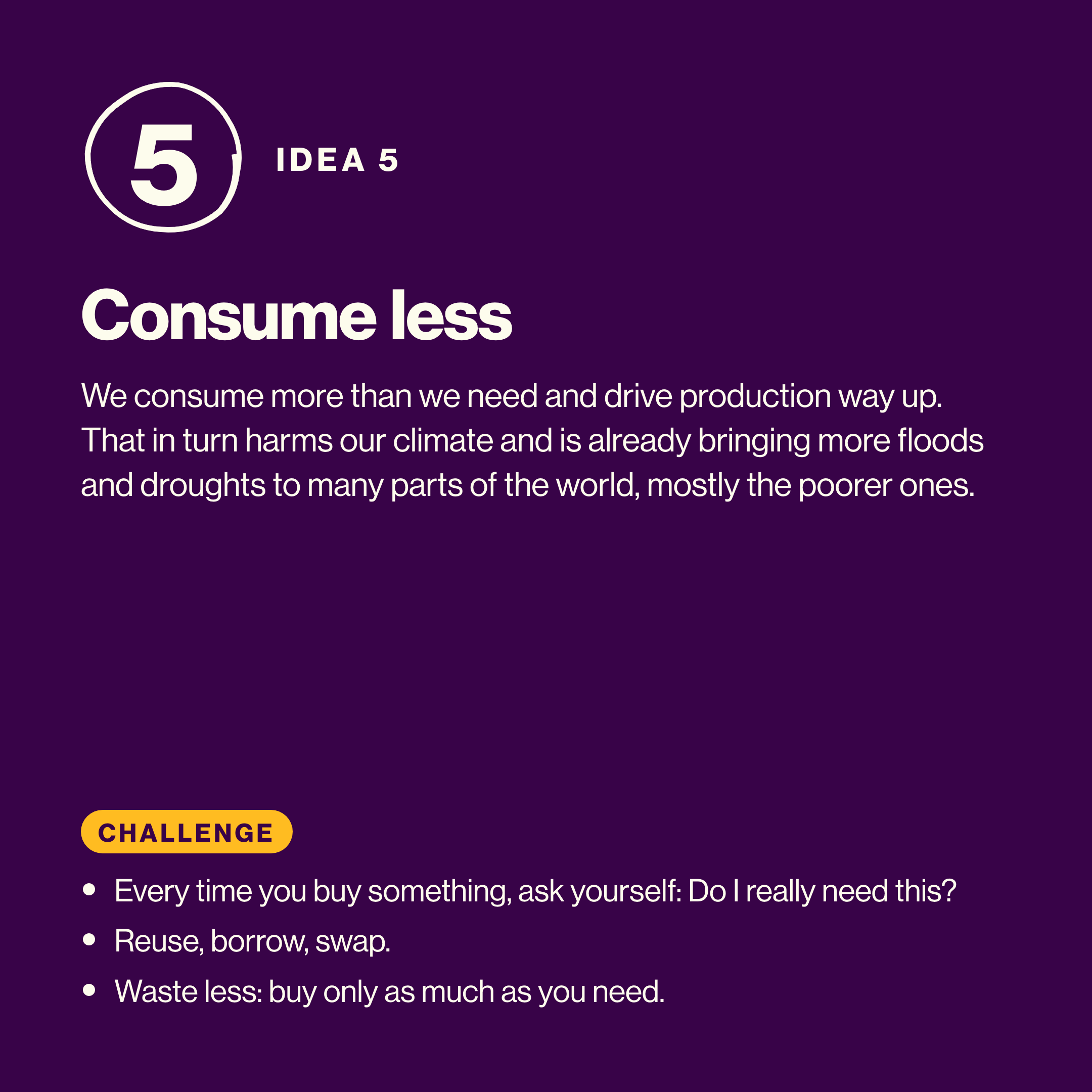
Nobody consumes as much as people in the world’s rich countries. Sadly, though, we think far too little about the direct effects our consumer habits have on living conditions in the countries where our goods are made. Consuming less means not only saving resources but also living more consciously. When we cut back on what we consume, we reduce demand for products that are often made at the expense of people in poverty. A minimalist lifestyle not only promotes sustainability, it also helps us see how much community and relationships matter.
6. Volunteers, step up!
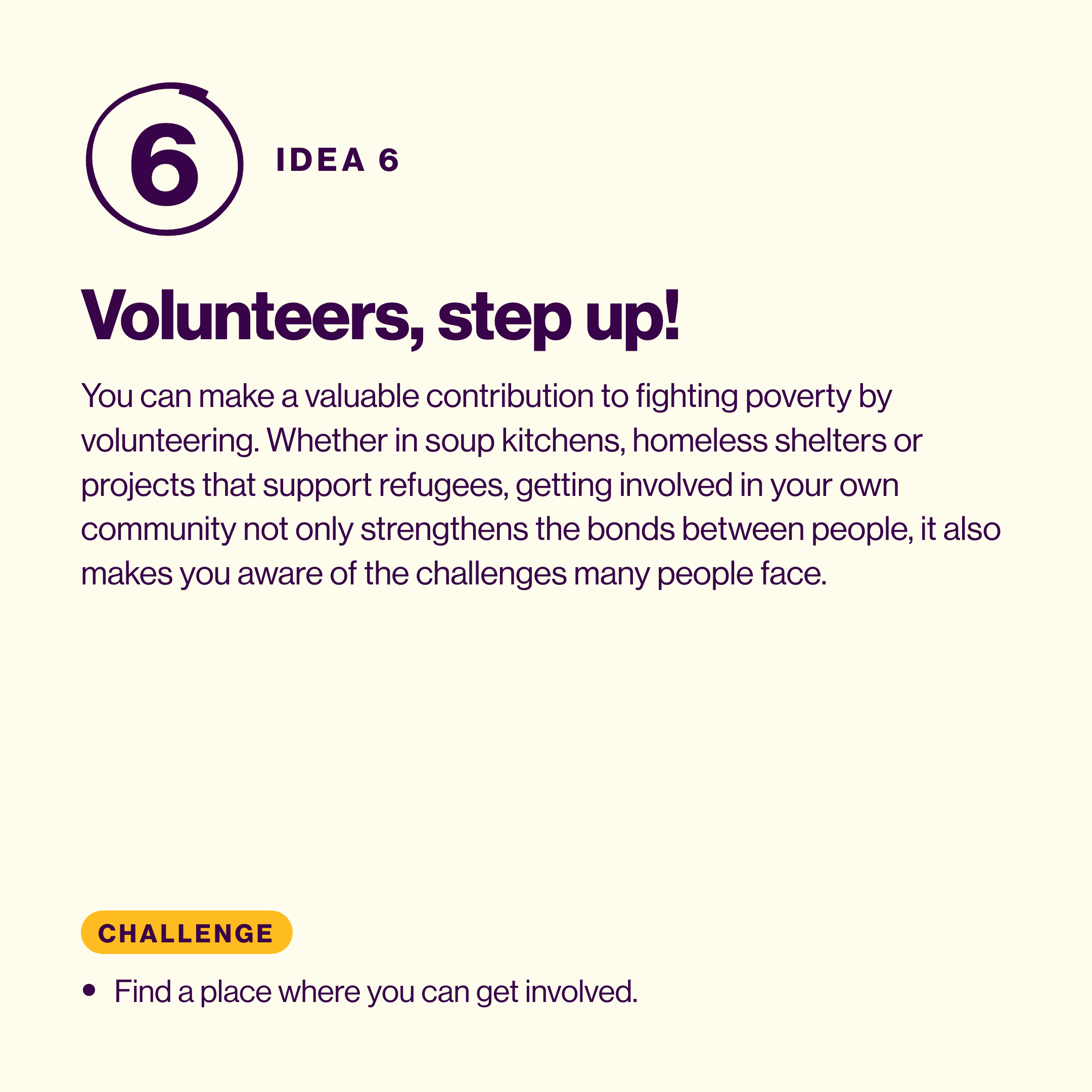
You can make a valuable contribution to fighting poverty by volunteering. Whether in soup kitchens, homeless shelters or projects that support refugees, getting involved in your own community not only strengthens the bonds between people, it also makes you aware of the challenges many people face. Experiences like these build empathy and understanding and can inspire young people to work actively for change.
7. Become an influencer against poverty!
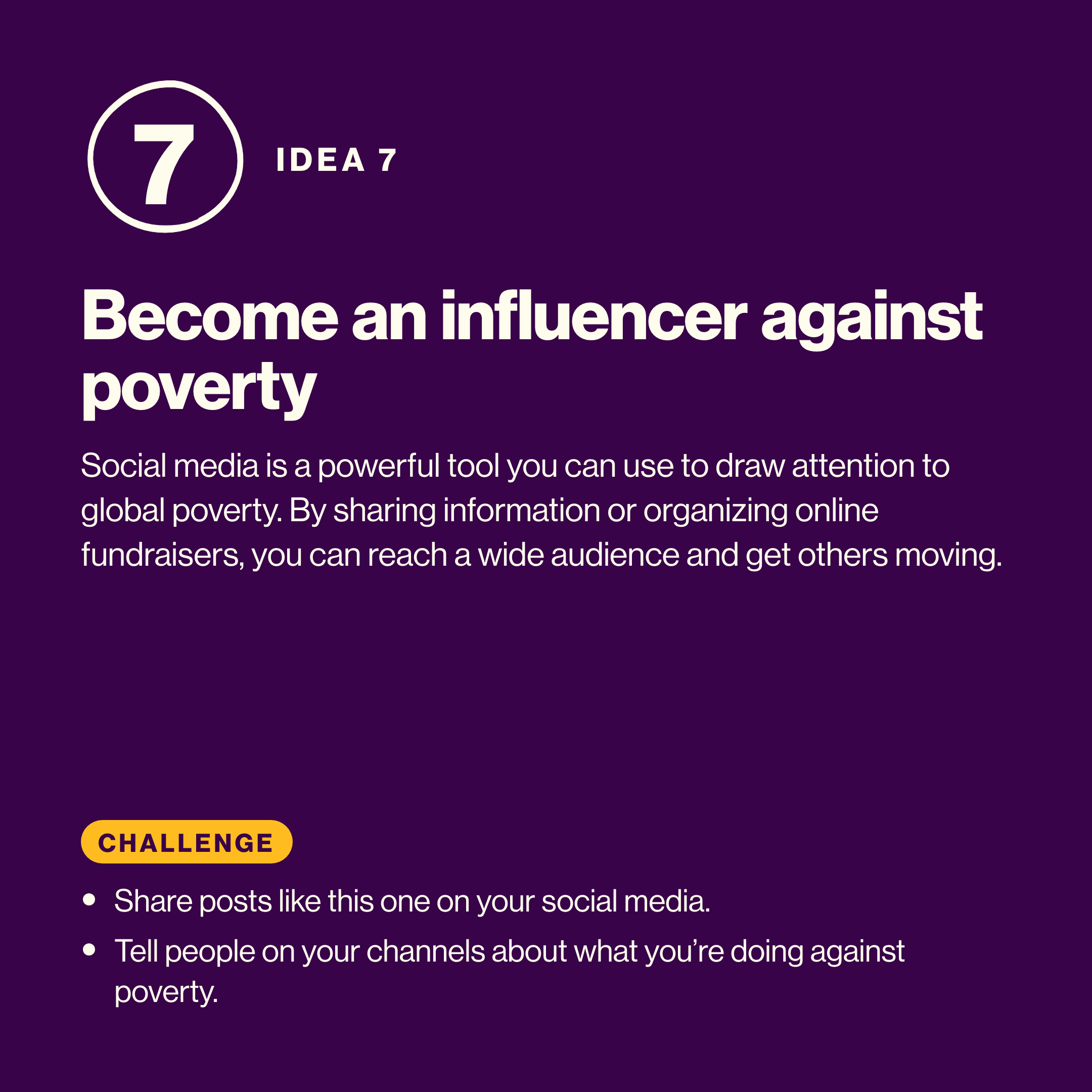
Social media is a powerful tool you can use to draw attention to the problems of poverty. By sharing information, creating campaigns or organizing online fundraisers, you can reach a wide audience and mobilize others. These platforms make it possible to tell stories that often go unheard and to build a community that stands up for social justice.
Written by Tamara Schmutz, project lead at Nacht ohne Dach (“Night Without a Roof”), a youth program in Switzerland.

